How did Damascus University evaluate SuperTech®?
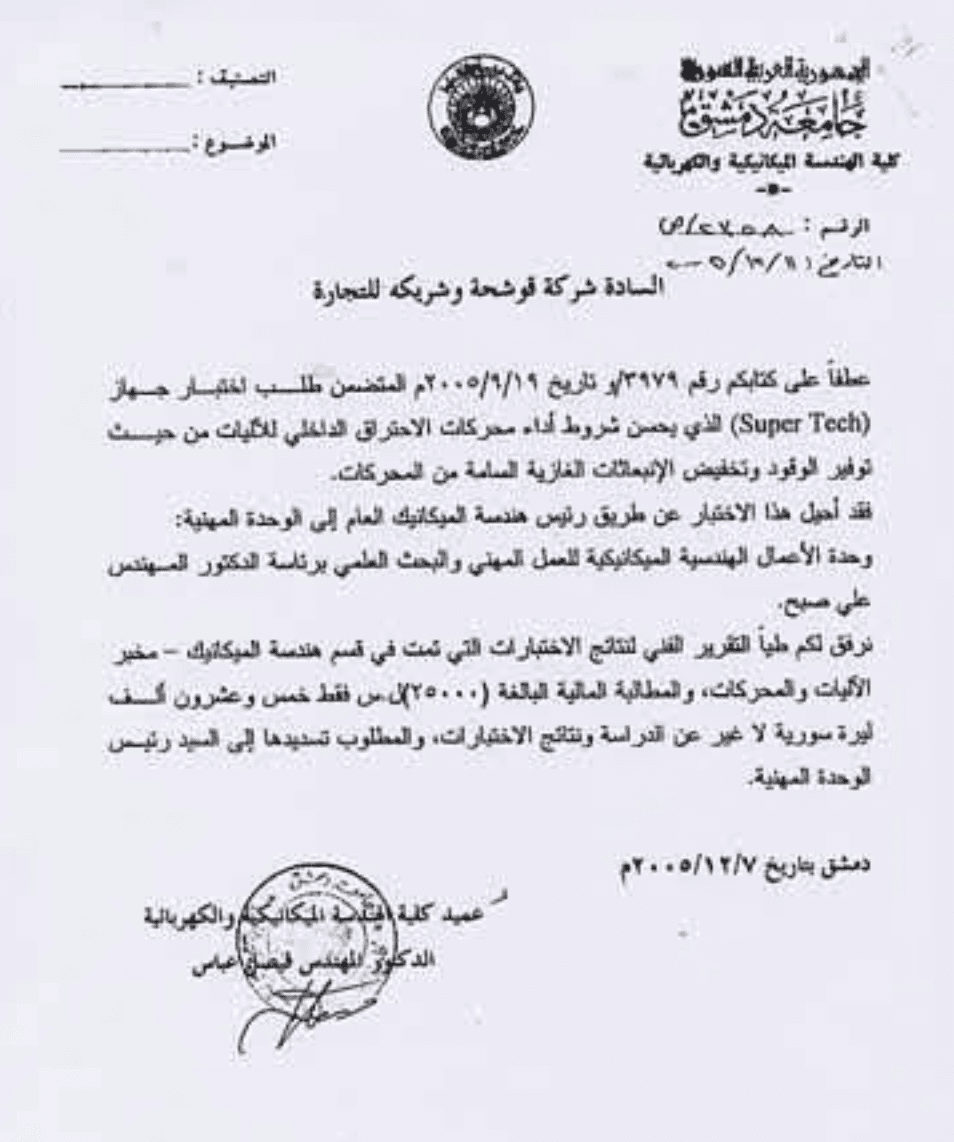
To assess the effects of upstream fuel optimization on fuel consumption, exhaust emissions, and engine behavior, the Faculty of Mechanical & Electrical Engineering at Damascus University (Syria) conducted a series of laboratory and real-world road tests on petrol and diesel vehicles equipped with SuperTech®.
The evaluation was carried out by the Laboratory of Machinery & Engines, under faculty supervision, as part of an applied engineering assessment focused on fuel economy and emissions behavior in internal combustion engines.
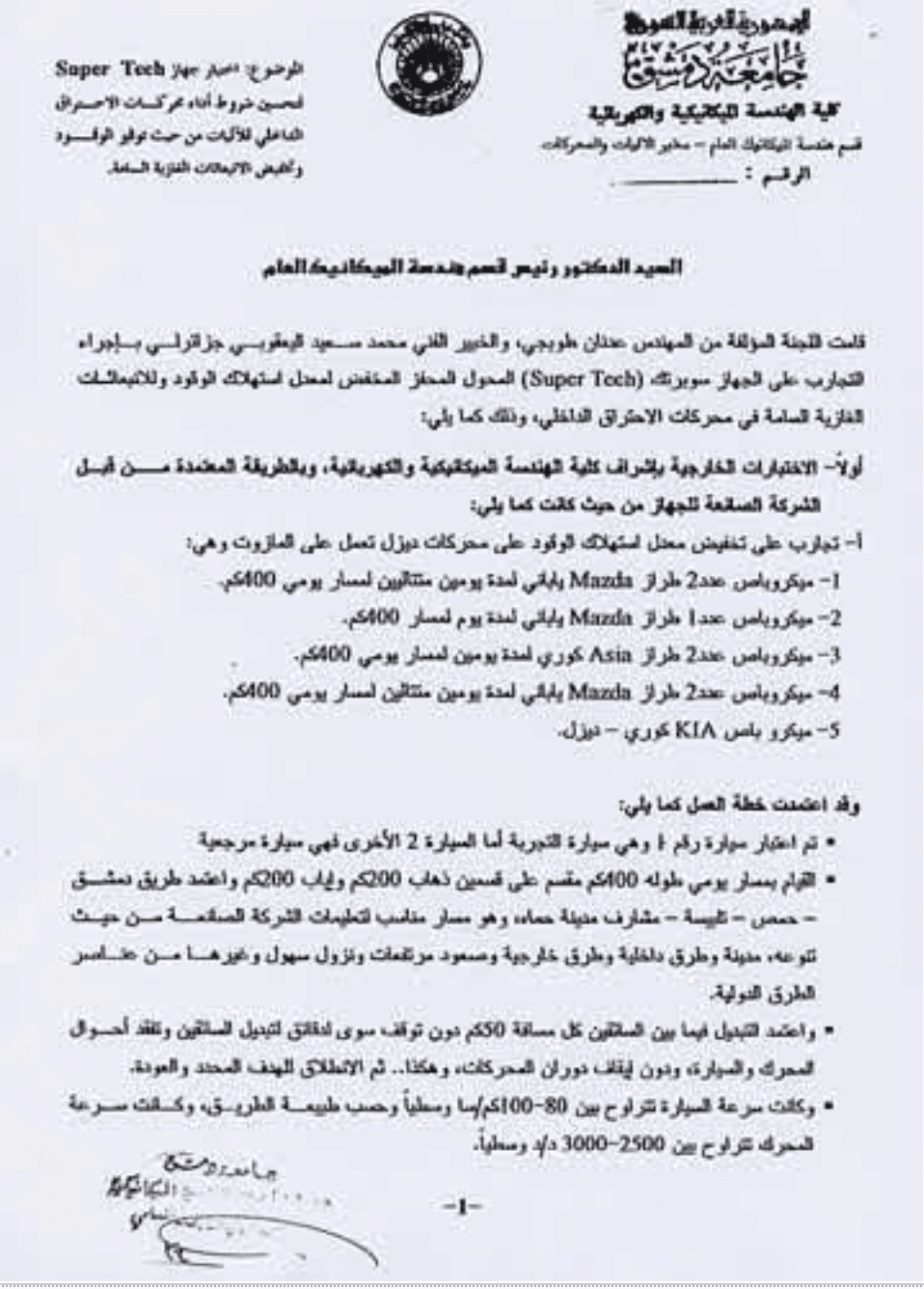
Evaluation Scope & Method
The testing program included both external road testing and controlled laboratory measurements, covering a range of vehicle types and operating conditions.
Key elements included:
Diesel vehicle road tests, including:
Mazda, Kia, and Asia microbuses
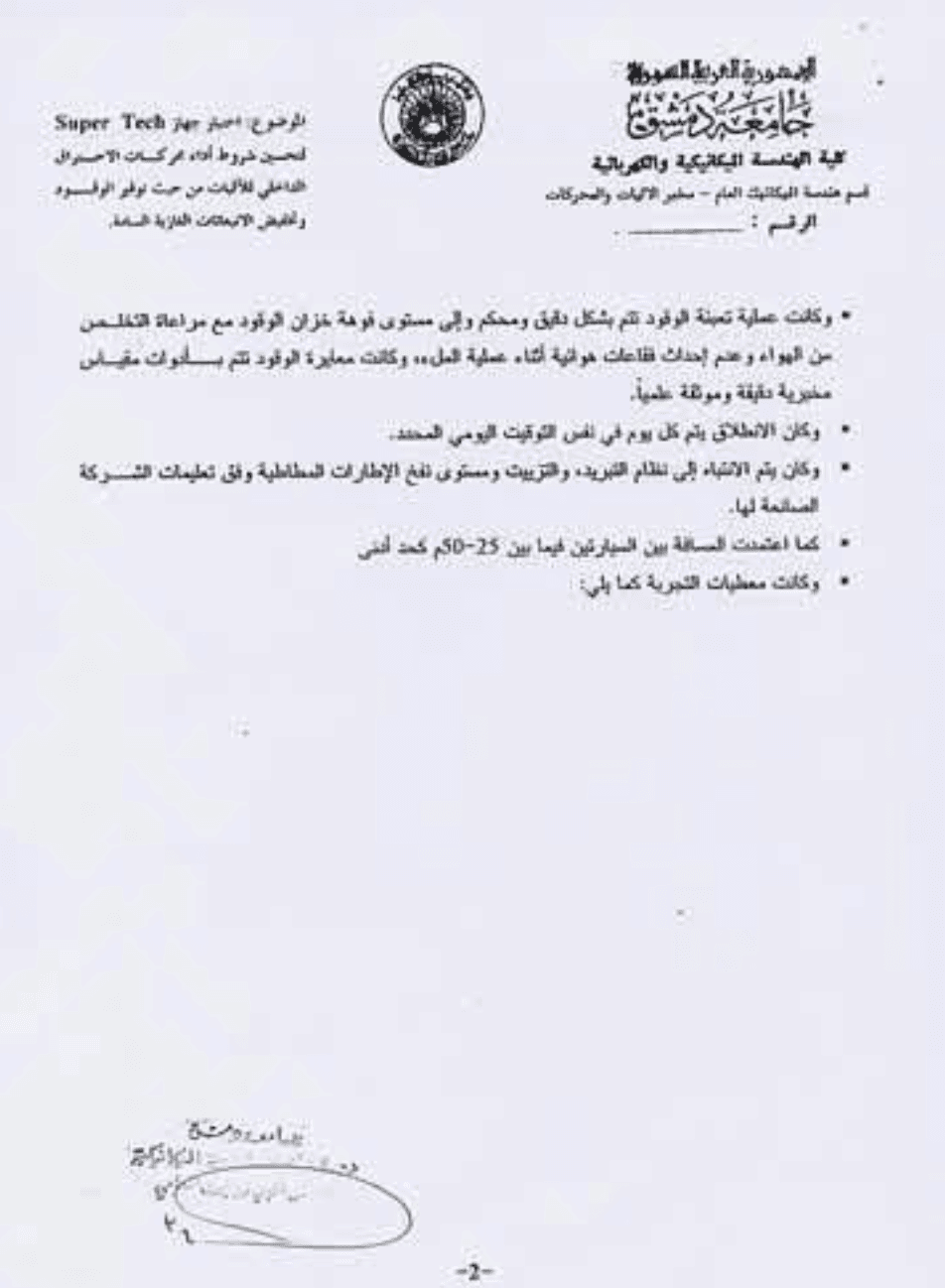
Repeated 400 km daily routes over mixed terrain (urban roads, highways, inclines, and descents)
Test and reference vehicles operated simultaneously with driver rotation to reduce bias
Petrol vehicle testing, including:
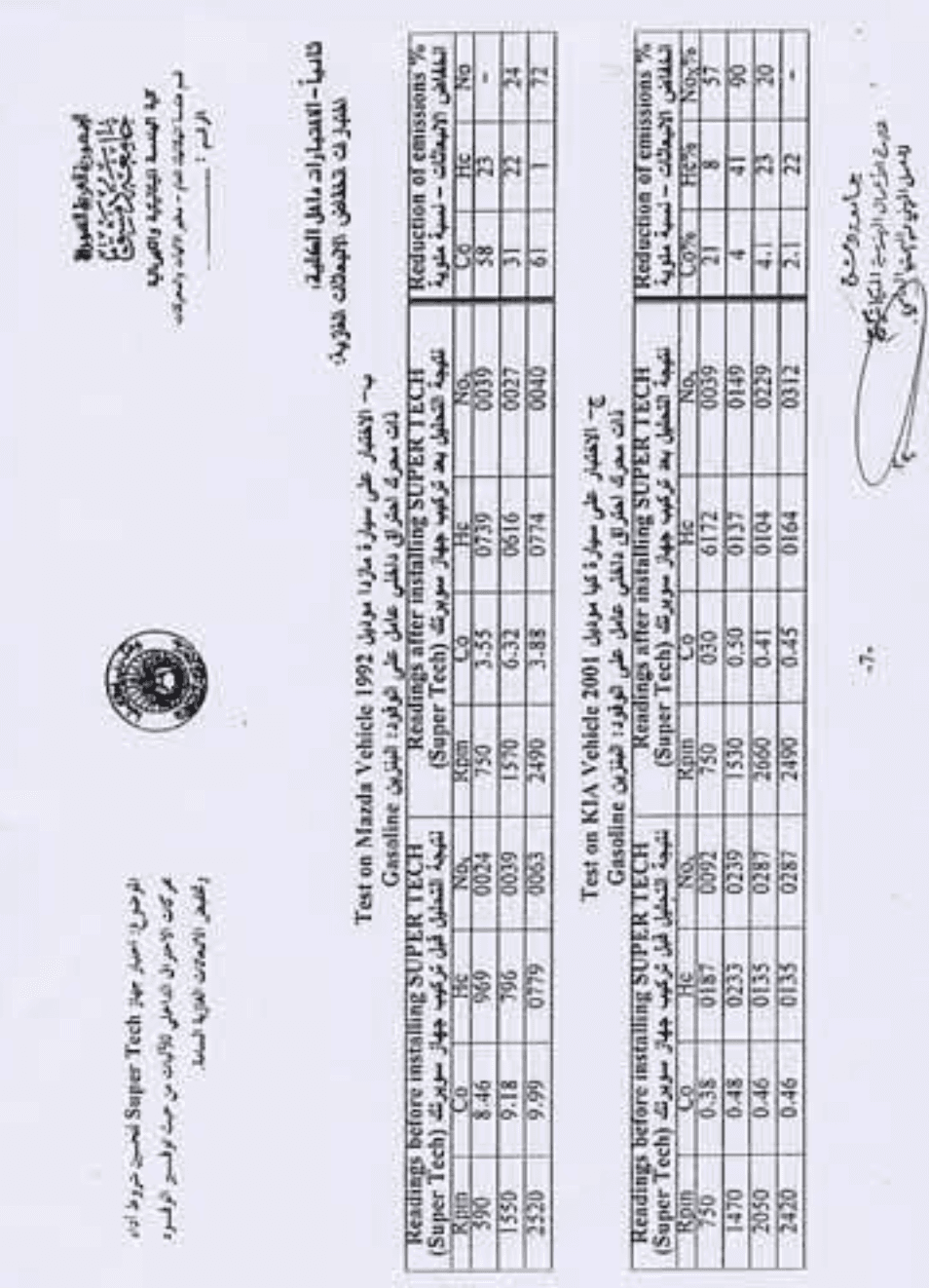
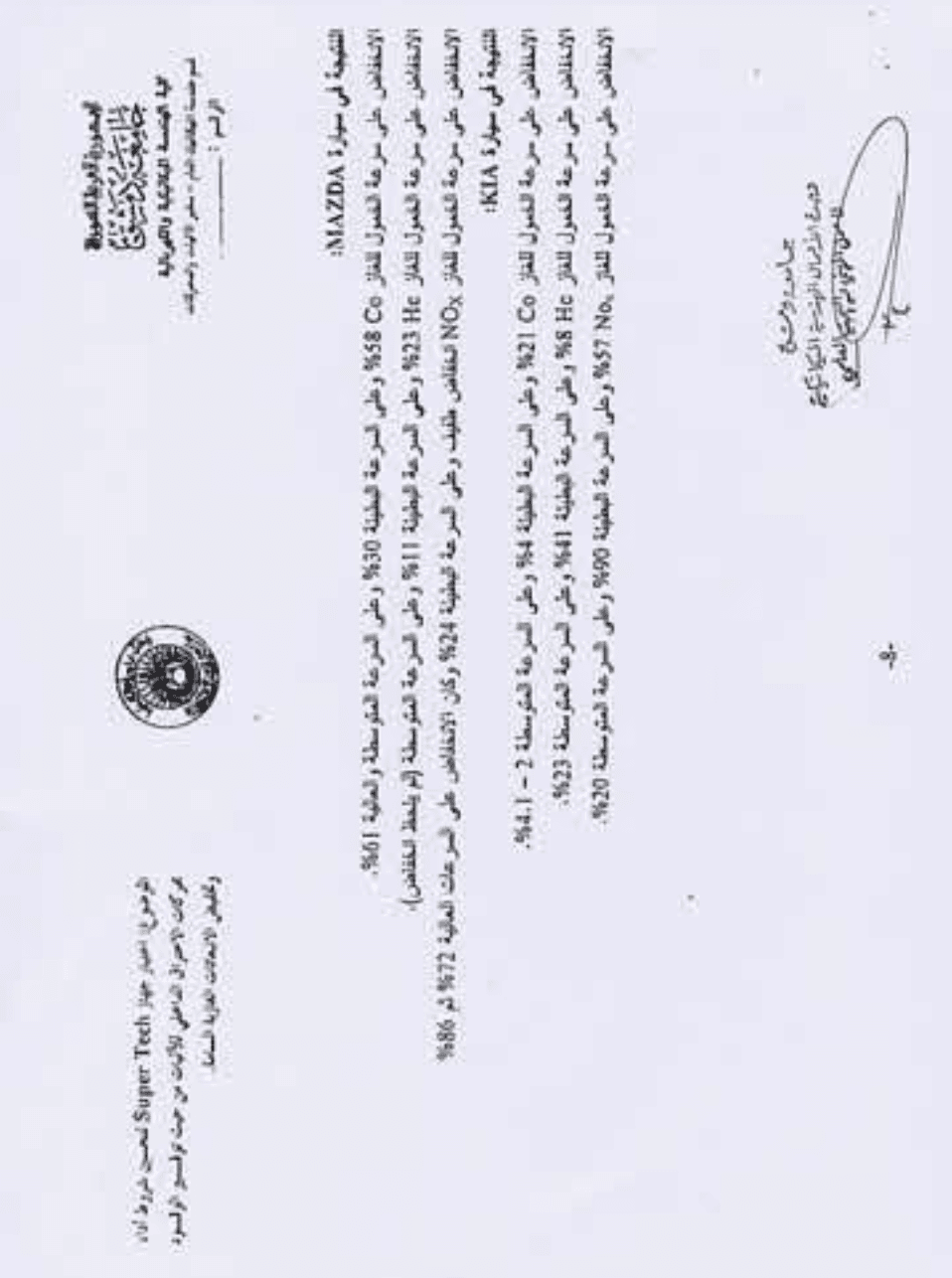
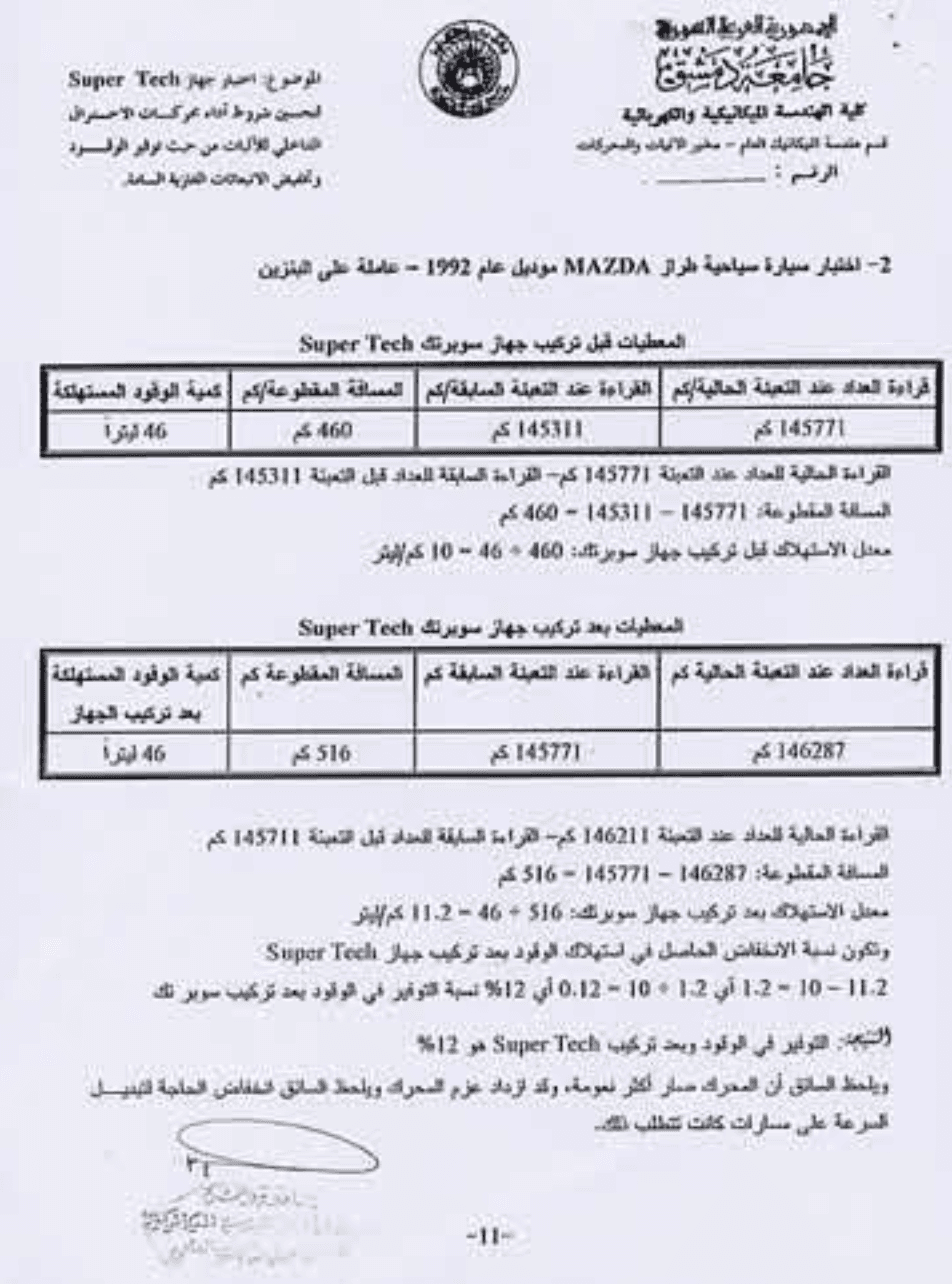
Mazda (1992, 2001, 2003 models)
Kia (2001)
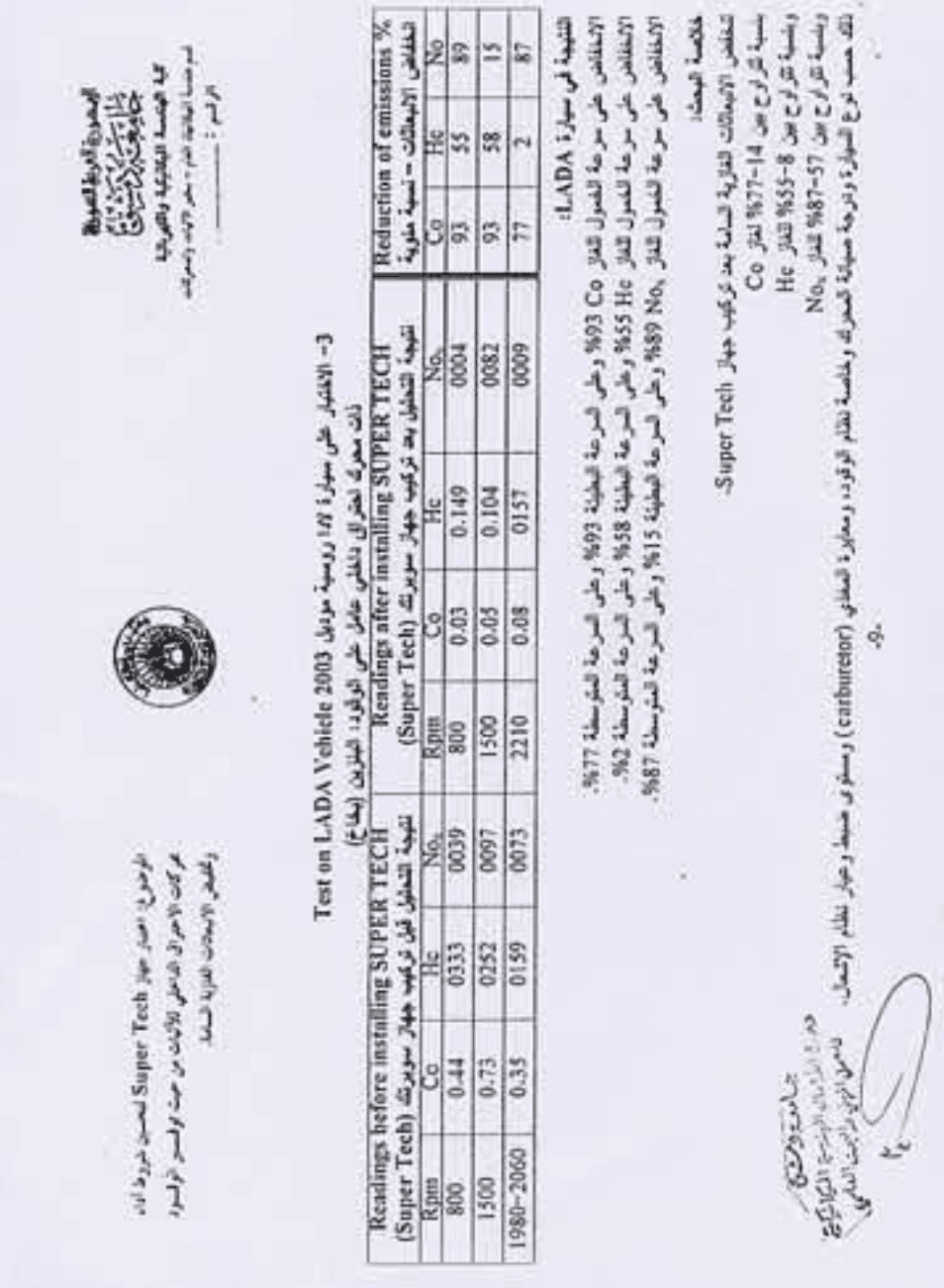
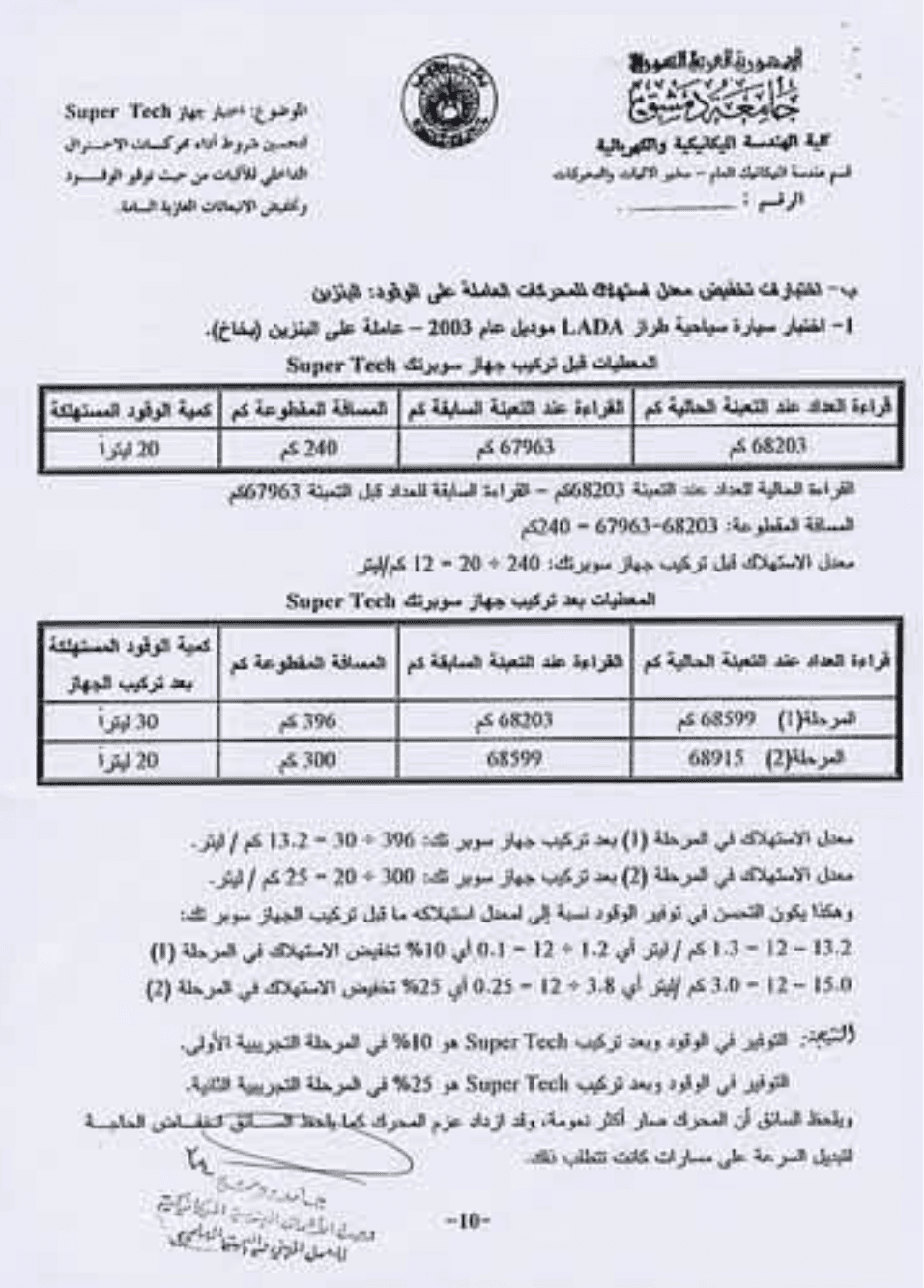
LADA (2003, fuel-injected)
Before-and-after comparisons with identical routes, loads, and operating parameters
Fuel consumption measured via calibrated volumetric methods
Exhaust emissions measured for:
Carbon monoxide (CO)
Hydrocarbons (HC)
Nitrogen oxides (NOx)
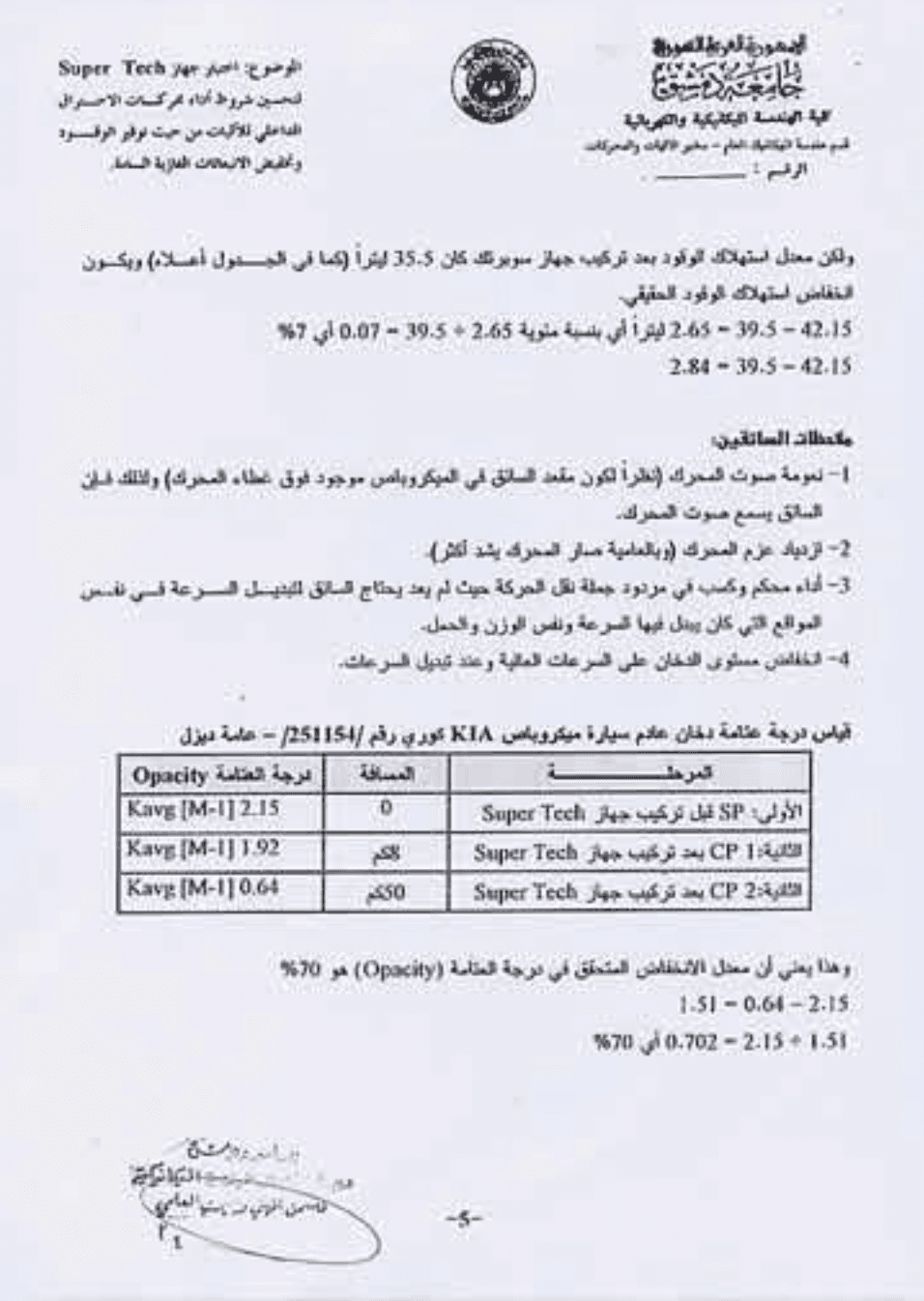
Diesel exhaust opacity
No engine modifications, tuning, or changes to vehicle systems were made during the evaluation.
What were the observed results following installation?
Across multiple vehicle types and test scenarios, the Damascus University evaluation documented:
Fuel Consumption
Diesel vehicles:
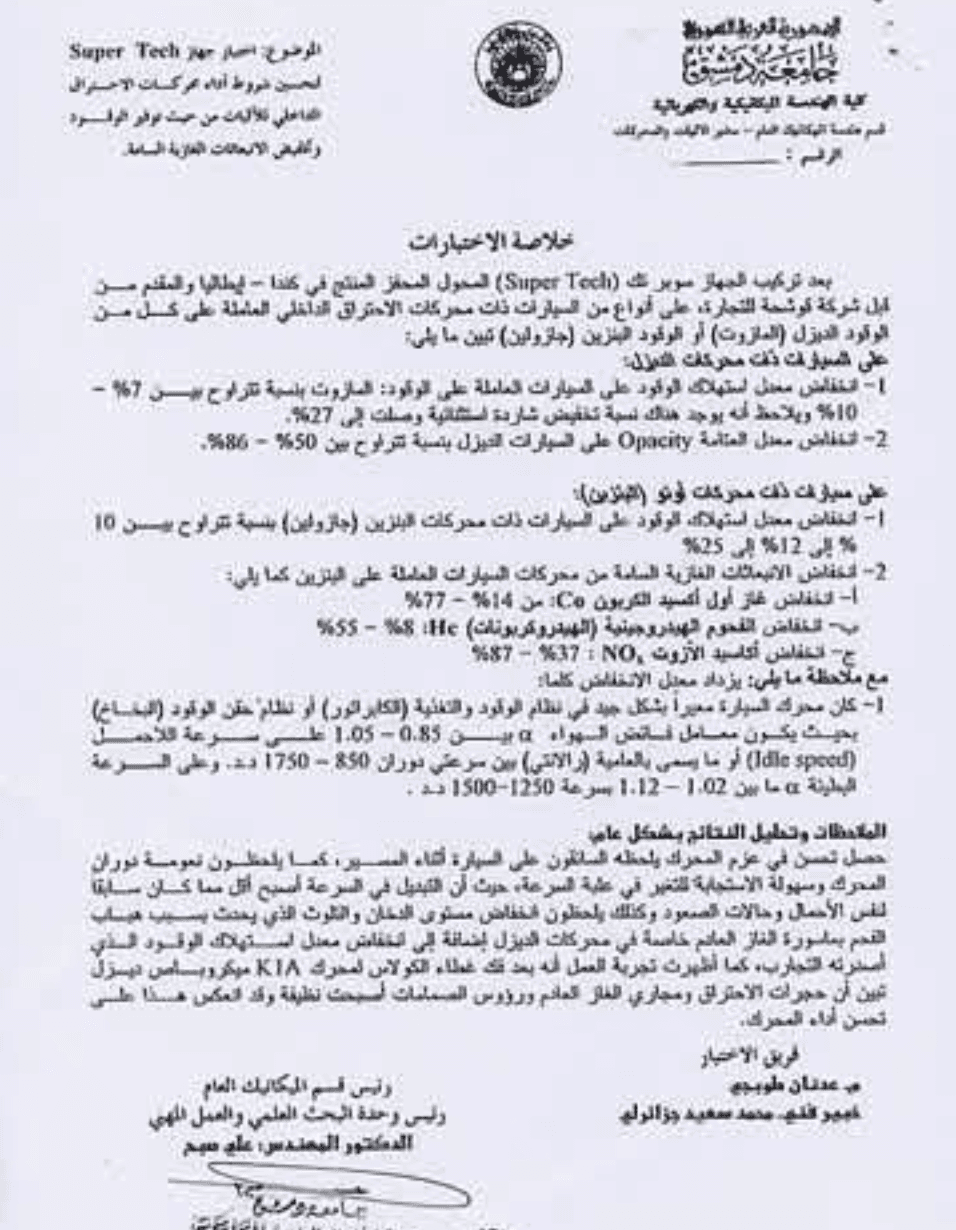
Documented fuel-consumption reductions typically in the range of 7–10% under road-test conditions
Petrol vehicles:
Documented fuel-consumption reductions generally in the range of 10–12%, depending on vehicle and test stage
Exhaust Emissions
Reductions in regulated exhaust pollutants, including:
Carbon monoxide (CO)
Hydrocarbons (HC)
Nitrogen oxides (NOx)
Substantial reductions in diesel exhaust opacity were observed in specific tests
Emissions behavior varied by vehicle condition, engine calibration, and operating speed, which is typical of real-world testing
Operational Observations
Drivers and technicians reported:
Smoother engine operation
Improved torque response
Reduced gear-shifting frequency under load
Visible reductions in exhaust smoke under acceleration
What is the key takeaway for engineers and fleet operators?
The Damascus University evaluation demonstrates that university-supervised laboratory and road testing can document measurable improvements in fuel consumption and exhaust behavior associated with upstream, in-tank fuel-conditioning technologies.
This reference documents observed outcomes under specific test conditions and does not constitute a regulatory certification or guarantee of results. Performance may vary depending on vehicle condition, fuel quality, maintenance practices, and duty cycle.