How did TÜV Pfalz evaluate SuperTech®?
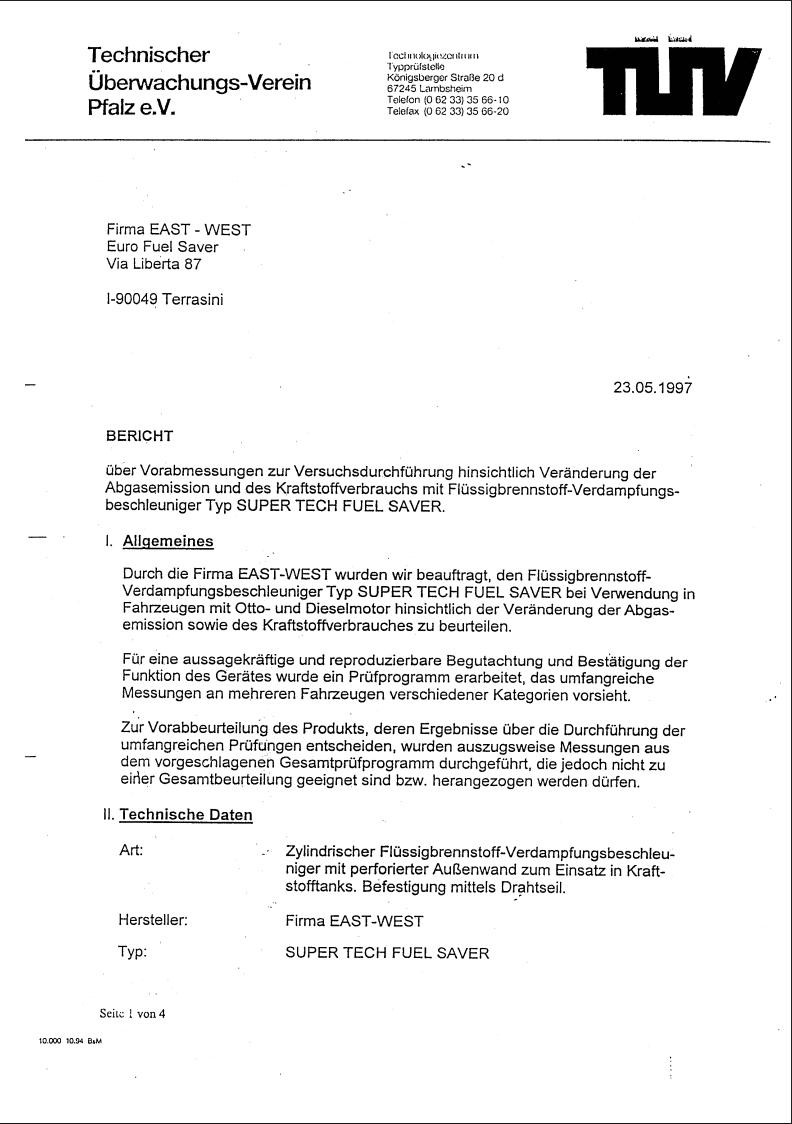
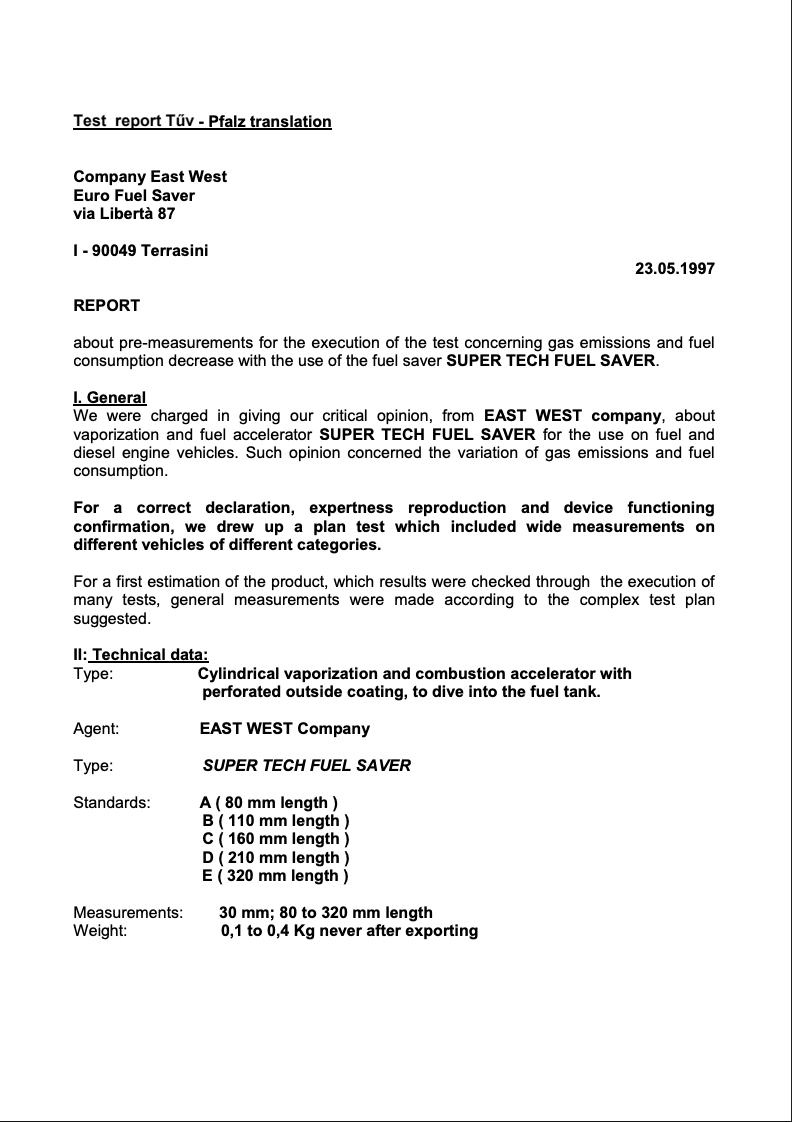
To assess the effects of upstream fuel treatment on fuel consumption and exhaust emissions, TÜV Pfalz e.V. (Germany) conducted controlled pre-measurement testing of the SuperTech® Fuel Saver as part of a structured test program.
The evaluation focused on measuring changes in fuel consumption under repeatable laboratory and road-based driving conditions, using standardized testing procedures and certified equipment.
Evaluation Scope & Method
The testing program included comparative measurements with and without SuperTech® installed, using the same vehicle and test parameters.
Key elements of the evaluation included:
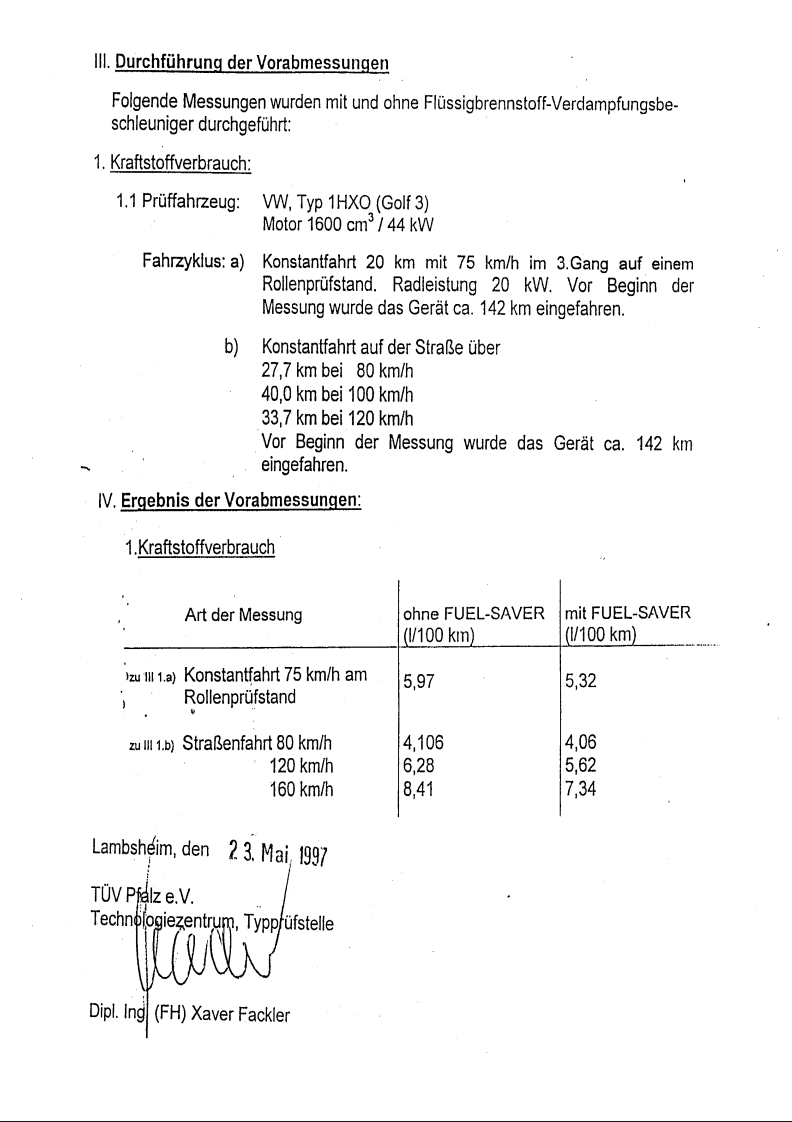
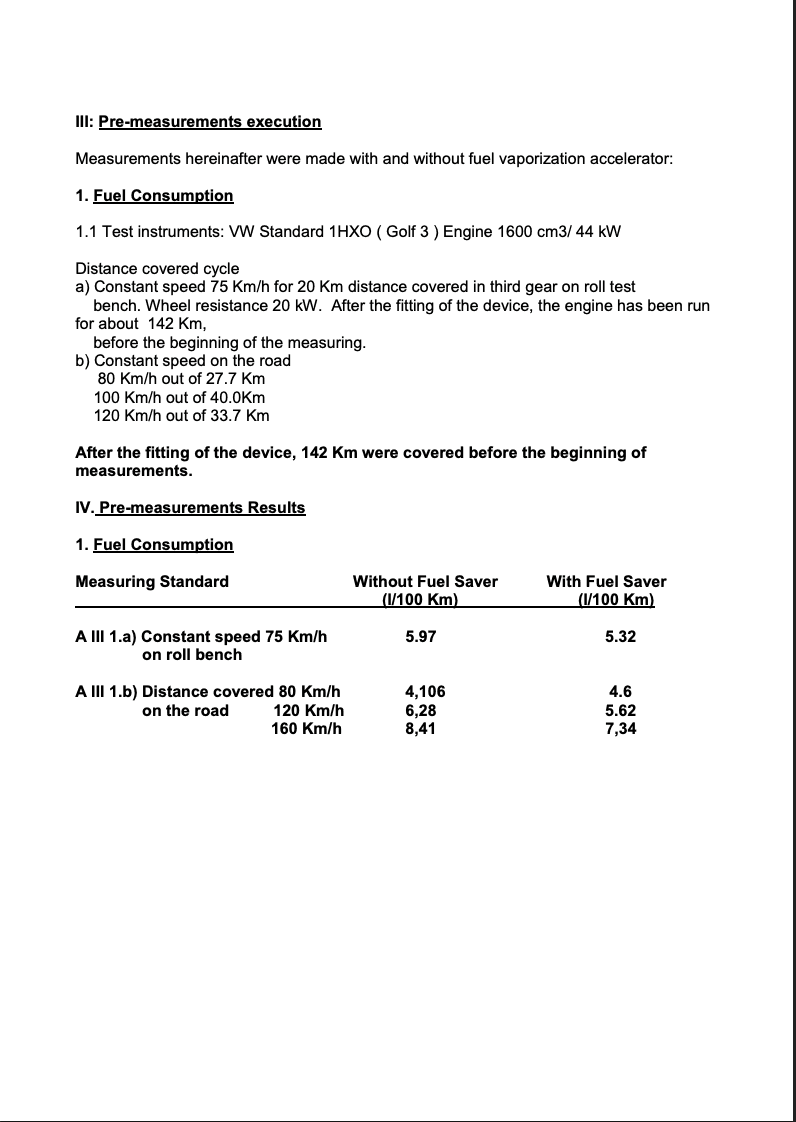
Test vehicle: Volkswagen Golf 3 (VW Type 1HXO)
Engine: 1.6 L petrol
Power output: 44 kW
Roller dynamometer testing, including:
Constant-speed operation at 75 km/h over a defined distance
Road testing at constant speeds, including:
80 km/h
100 km/h
120 km/h
A defined run-in distance (~142 km) following installation before measurements were recorded
All measurements were performed under identical conditions before and after installation. No engine modifications, tuning, or system changes were made during testing.
Which equipment and standards were used to validate the results?
Testing was conducted by TÜV Pfalz using certified laboratory procedures and measurement systems consistent with established German and European testing practices.
Fuel consumption measurements were recorded in liters per 100 kilometers (L/100 km), allowing direct comparison between baseline operation and operation with SuperTech® installed.
What were the observed results following installation?
Based on TÜV Pfalz’s documented measurements, fuel consumption was reduced under all evaluated test conditions.
Observed results included:
Roller dynamometer testing at 75 km/h:
Reduction from 5.97 L/100 km to 5.32 L/100 km
Road testing:
At 80 km/h: reduced fuel consumption compared to baseline
At 120 km/h: reduction from 6.28 L/100 km to 5.62 L/100 km
At higher constant speeds, fuel consumption reductions remained consistent
These results indicate measurable fuel-efficiency improvements under controlled and repeatable test conditions.
What is the key takeaway for engineers and fleet operators?
The TÜV Pfalz evaluation demonstrates that independent laboratory and road-based testing can document reductions in fuel consumption associated with upstream, in-tank fuel-conditioning technologies.
This reference documents observed outcomes under specific test conditions and represents a pre-measurement evaluation, not a regulatory certification or guarantee of results. Performance may vary depending on vehicle configuration, operating conditions, and duty cycle.