How was SuperTech® evaluated on aggregate and mining equipment?
To evaluate the impact of upstream fuel optimization on fuel consumption across different machine classes, a structured field study was conducted by an aggregate and mining equipment manufacturer and distributor operating crushing, batching, and excavation machinery.
The evaluation assessed SuperTech® across three different equipment categories, representing petrol and diesel engines with fuel-tank capacities ranging from 55 to over 500 liters, under normal operating conditions.
Evaluation Scope & Method
The study included testing of three SuperTech® models:
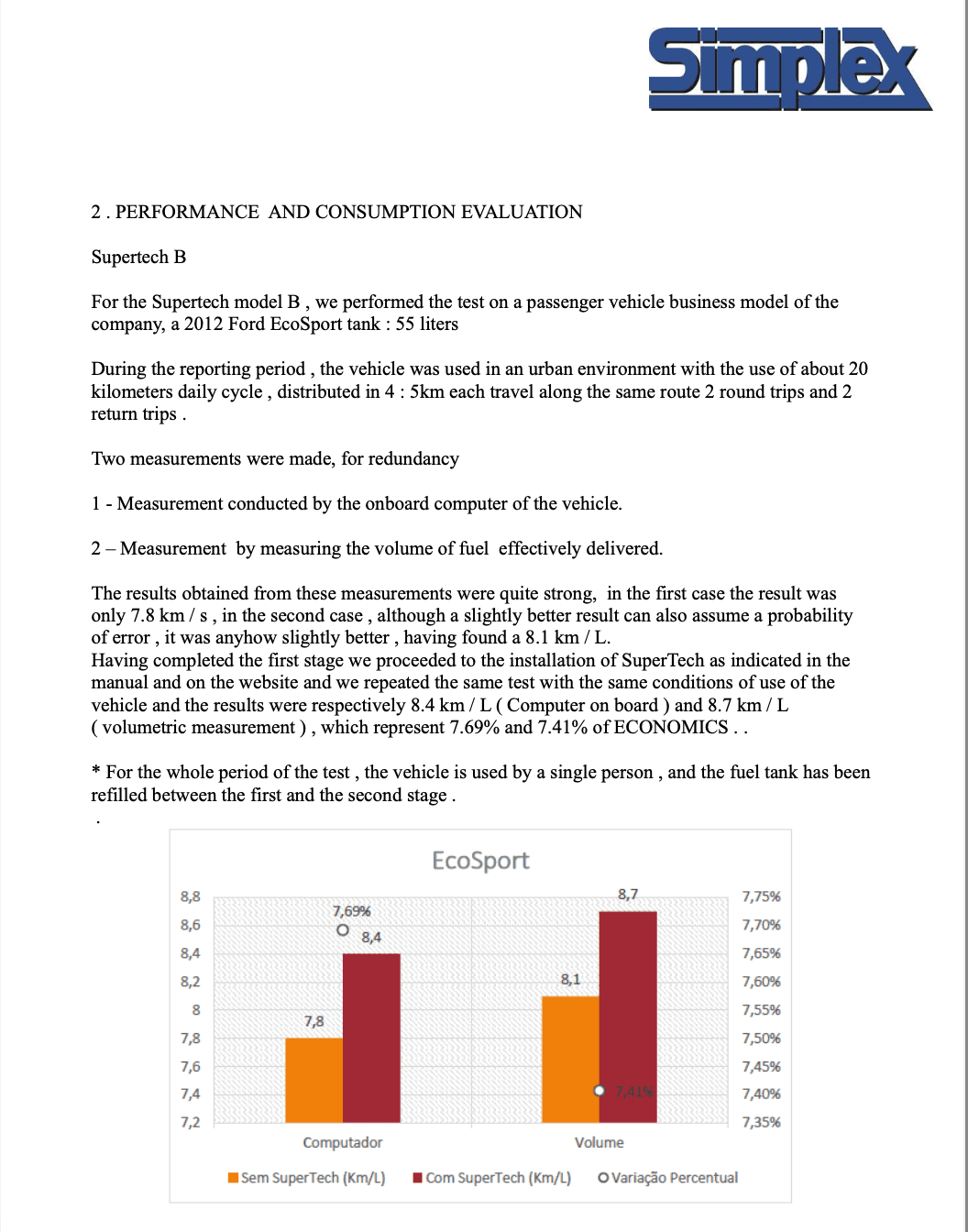
SuperTech® Model B (Passenger Vehicle – Petrol)
Vehicle: 2012 Ford EcoSport
Fuel: 87-octane petrol (E25)
Operating cycle:
Urban driving, ~20 km/day
Repeated identical routes
Test duration:
5 days baseline (no SuperTech®)
5 days post-installation
Measurement methods:
Onboard computer
Volumetric fuel measurement
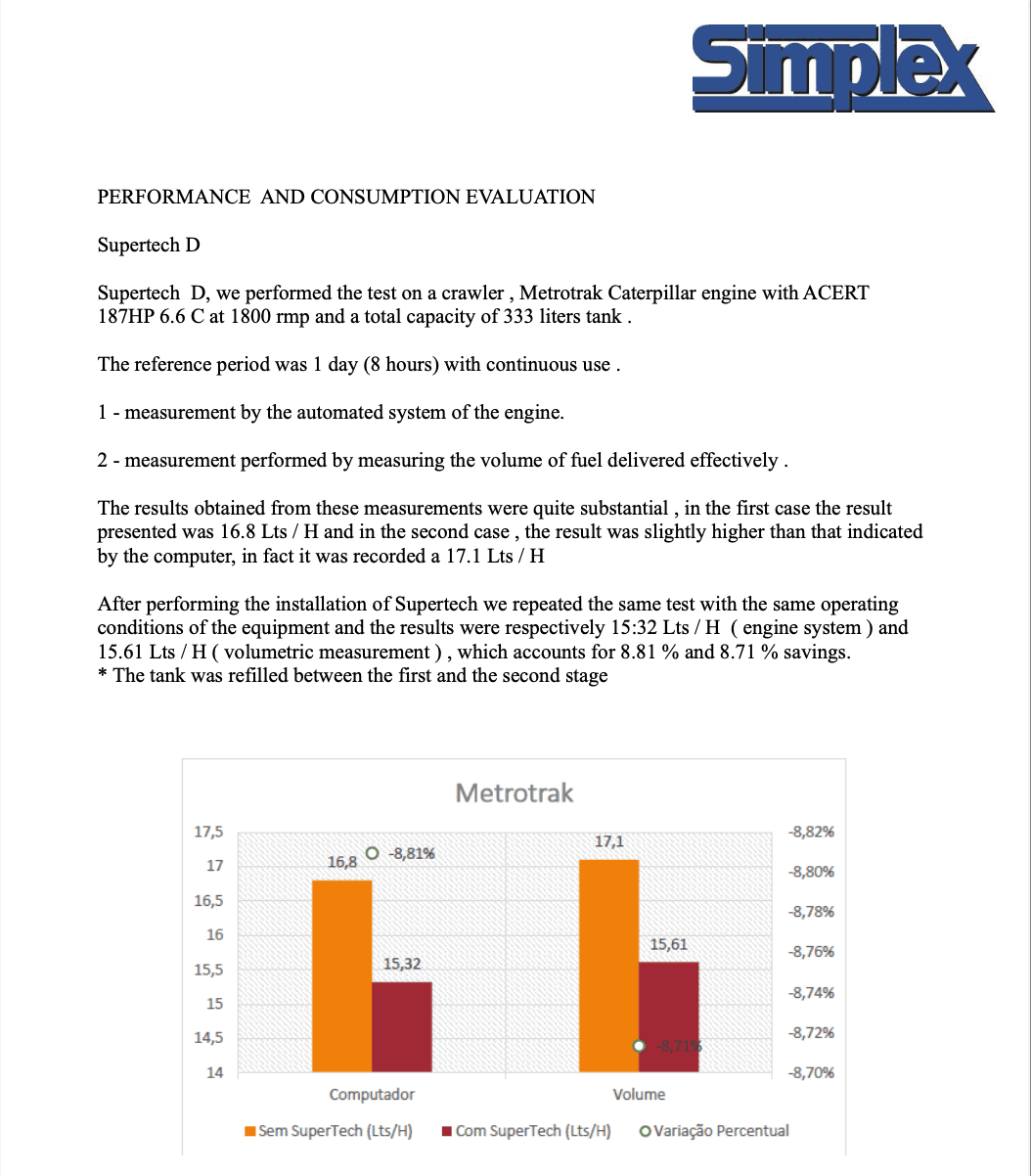
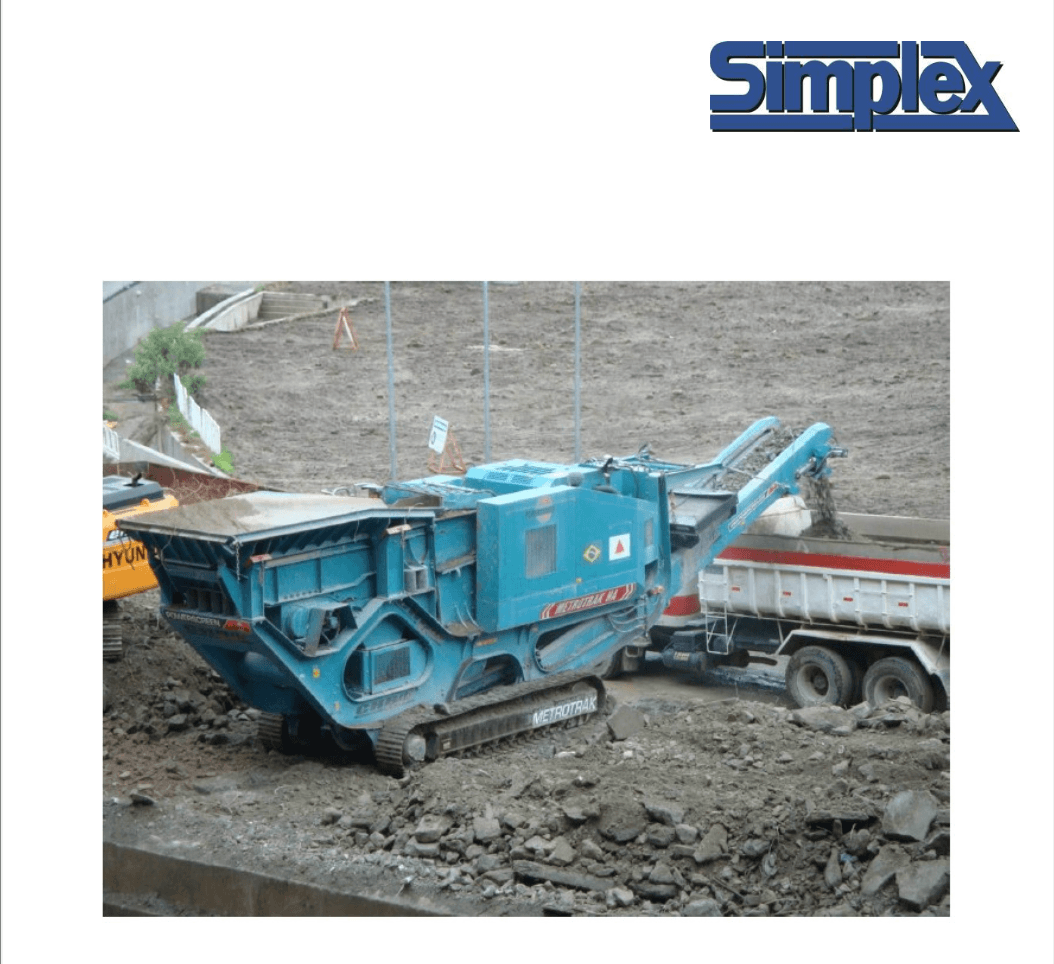
SuperTech® Model D (Crawler Crusher – Diesel)
Equipment: Metrotrak crawler with Caterpillar ACERT engine
Power: 187 HP
Tank capacity: ~333 liters
Test duration:
1 full workday baseline
1 full workday post-installation
Measurement methods:
Engine monitoring system
Volumetric fuel measurement
SuperTech® Model E (High-Power Crawler – Diesel)
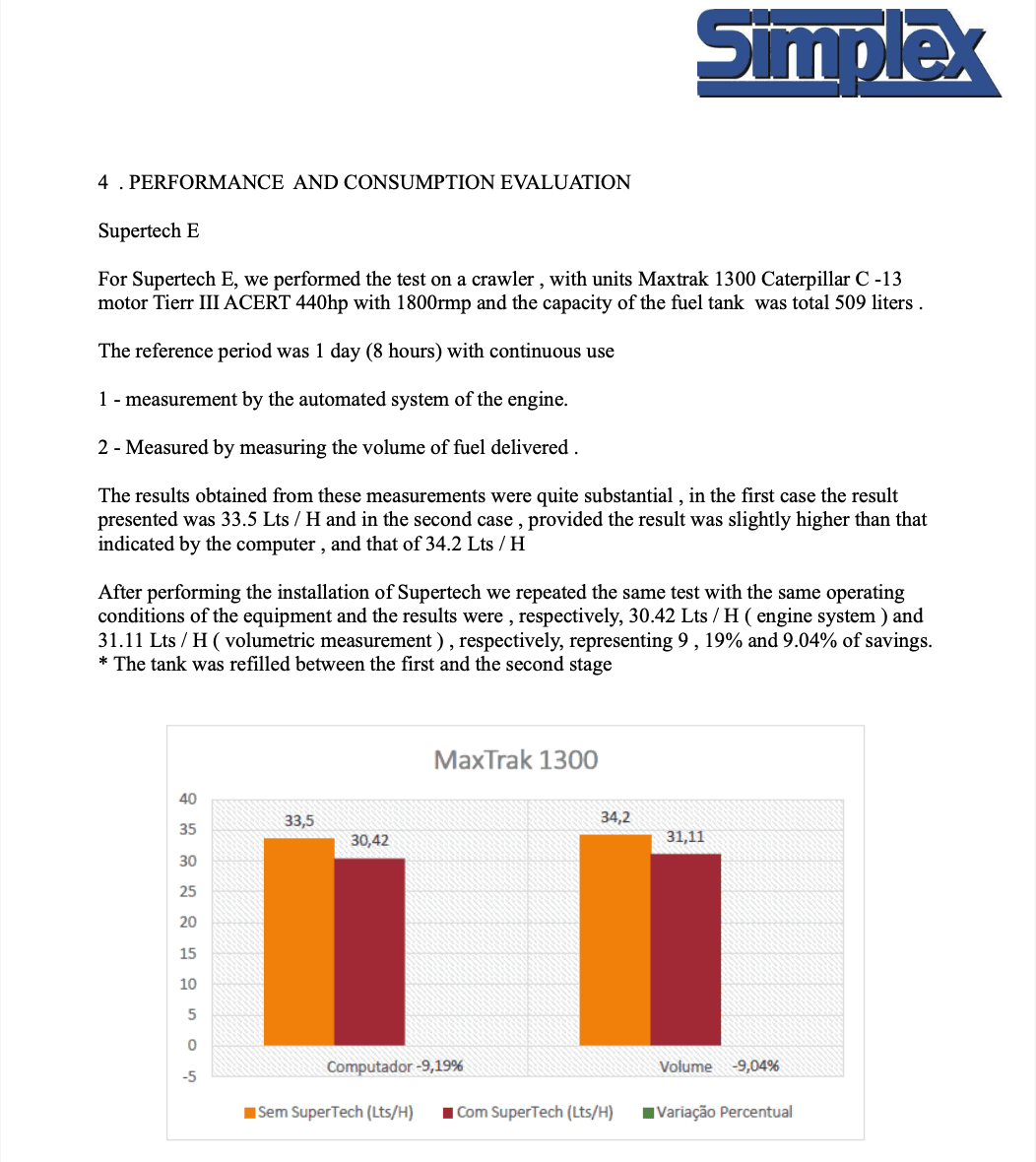
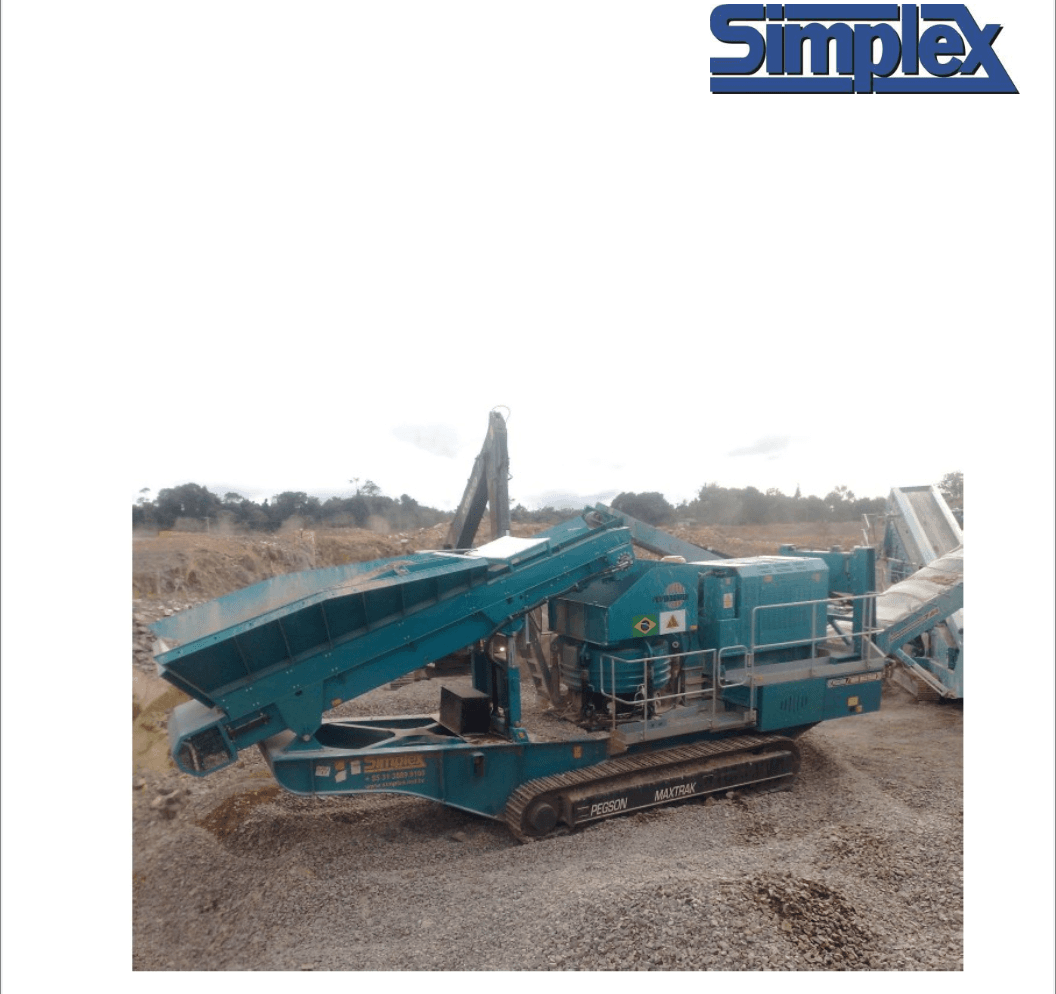
Equipment: Maxtrak 1300 crawler with Caterpillar C-13 Tier III ACERT engine
Power: 440 HP
Tank capacity: ~509 liters
Test duration:
1 full workday baseline
1 full workday post-installation
Measurement methods:
Engine monitoring system
Volumetric fuel measurement
No engine modifications, tuning, or operational changes were made during the evaluation periods. Fuel tanks were refilled between baseline and post-installation phases to ensure measurement consistency.
What were the observed results following installation?
Across all tested vehicles and equipment, the evaluation documented consistent fuel-consumption reductions following the installation of SuperTech®:
Passenger vehicle (Model B):
Fuel economy improvement of approximately 7.4–7.7%
Crawler crusher (Model D):
Fuel consumption reduction of approximately 8.7–8.8%
High-power crawler (Model E):
Fuel consumption reduction of approximately 9.0–9.2%
When averaged across all tested petrol and diesel platforms, the study reported a mean fuel-savings value of approximately 8.5%.
The evaluation also observed a positive correlation between engine power and fuel-saving magnitude, with higher-output engines demonstrating greater relative improvements.
What is the key takeaway for equipment operators?
This multi-platform field evaluation demonstrates that source-level, in-tank fuel optimization can deliver consistent, repeatable fuel-consumption reductions across a wide range of engine sizes, fuel types, and equipment classes used in aggregate production and mining operations.
Results document observed outcomes under specific operating conditions and do not constitute a regulatory certification or guarantee of results. Performance may vary depending on machine condition, workload, fuel quality, and duty cycle.