Government Laboratory Dynamometer Testing Documents Average Fuel Savings of ~14.9%
How did SENA (Colombia) evaluate SuperTech®?
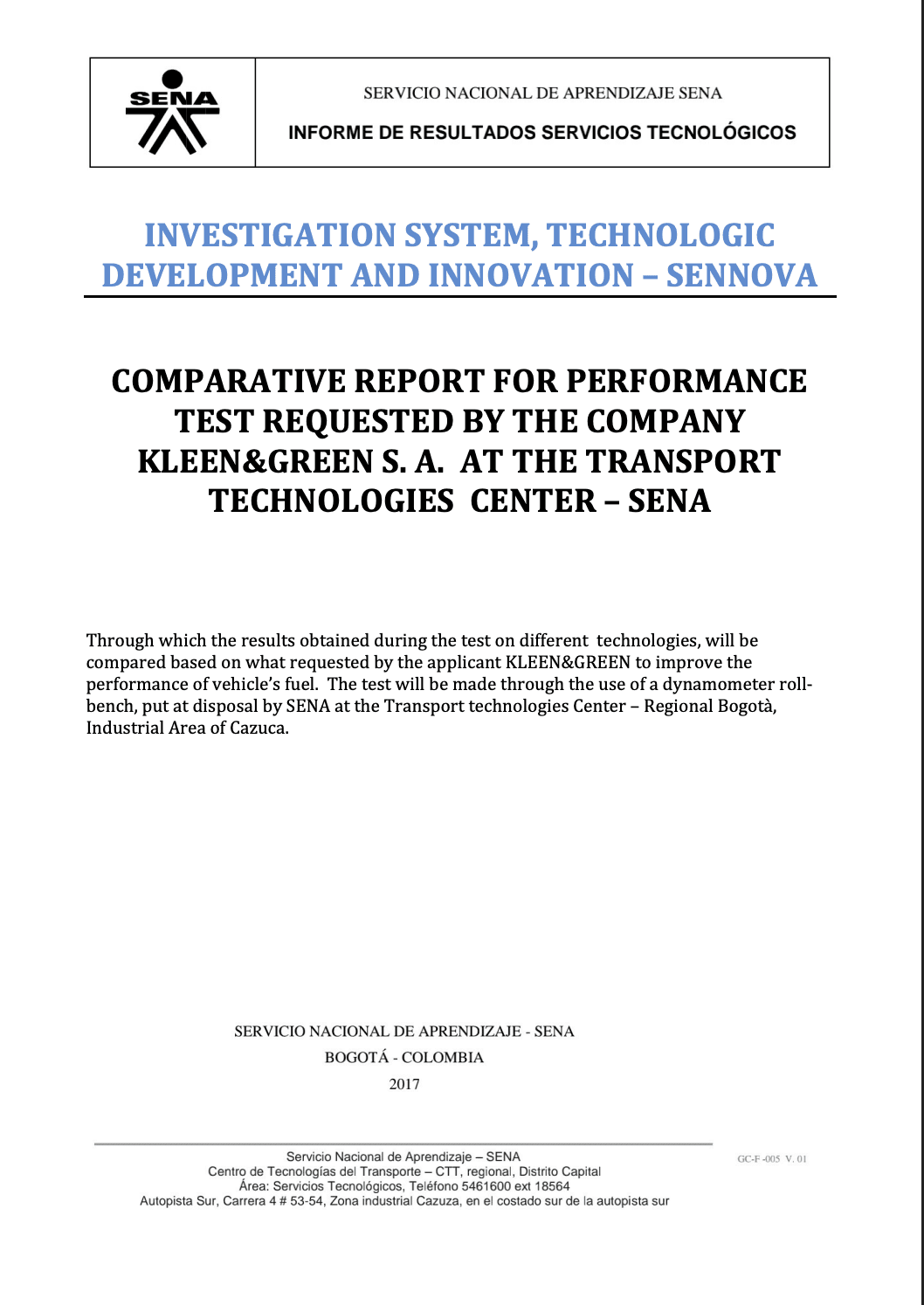
The Servicio Nacional de Aprendizaje (SENA), through its Transport Technologies Center (CTT) and SENNOVA research program, conducted a comparative laboratory evaluation to assess the impact of an upstream, in-tank fuel-conditioning device on vehicle fuel consumption and performance.
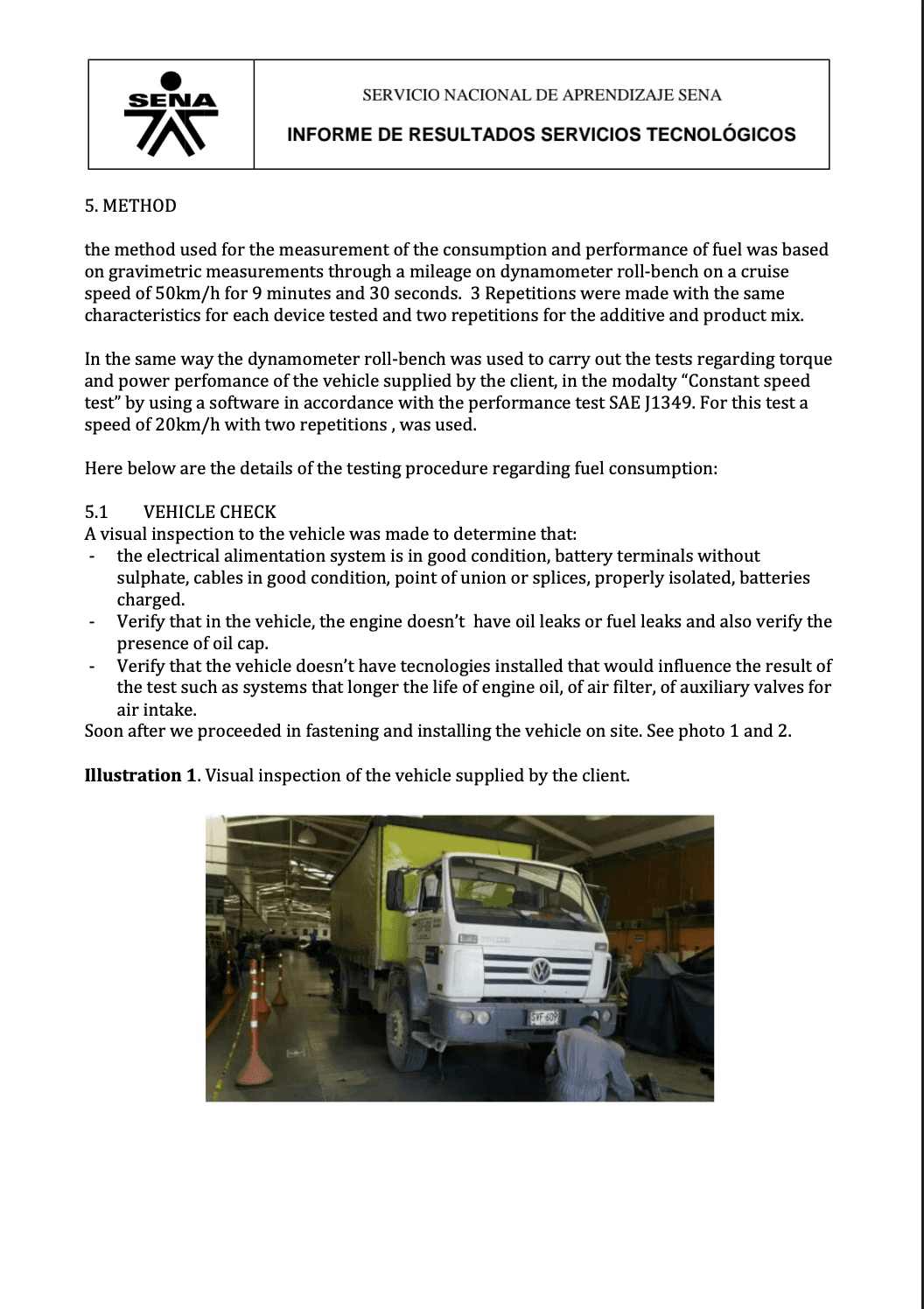
The evaluation was performed at SENA’s Automotive Dynamics Testing Laboratory in Bogotá, using controlled dynamometer roll-bench testing requested by an industrial applicant.
Evaluation Scope & Method
According to the official SENA technical report, the evaluation included:
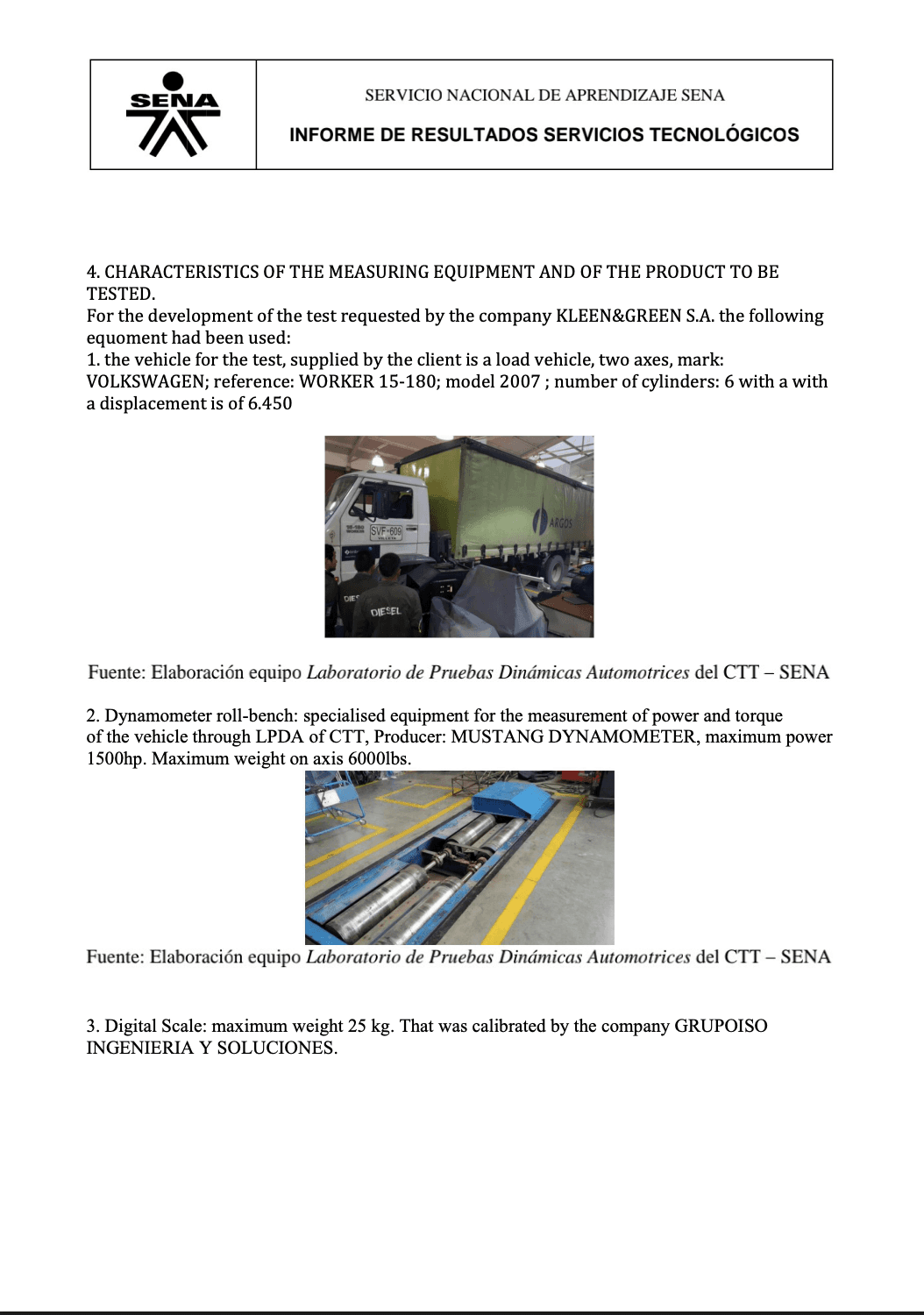
Test vehicle:
Volkswagen Worker 15-180
Model year 2007
6-cylinder diesel engine (6.45 L displacement)
Testing environment:
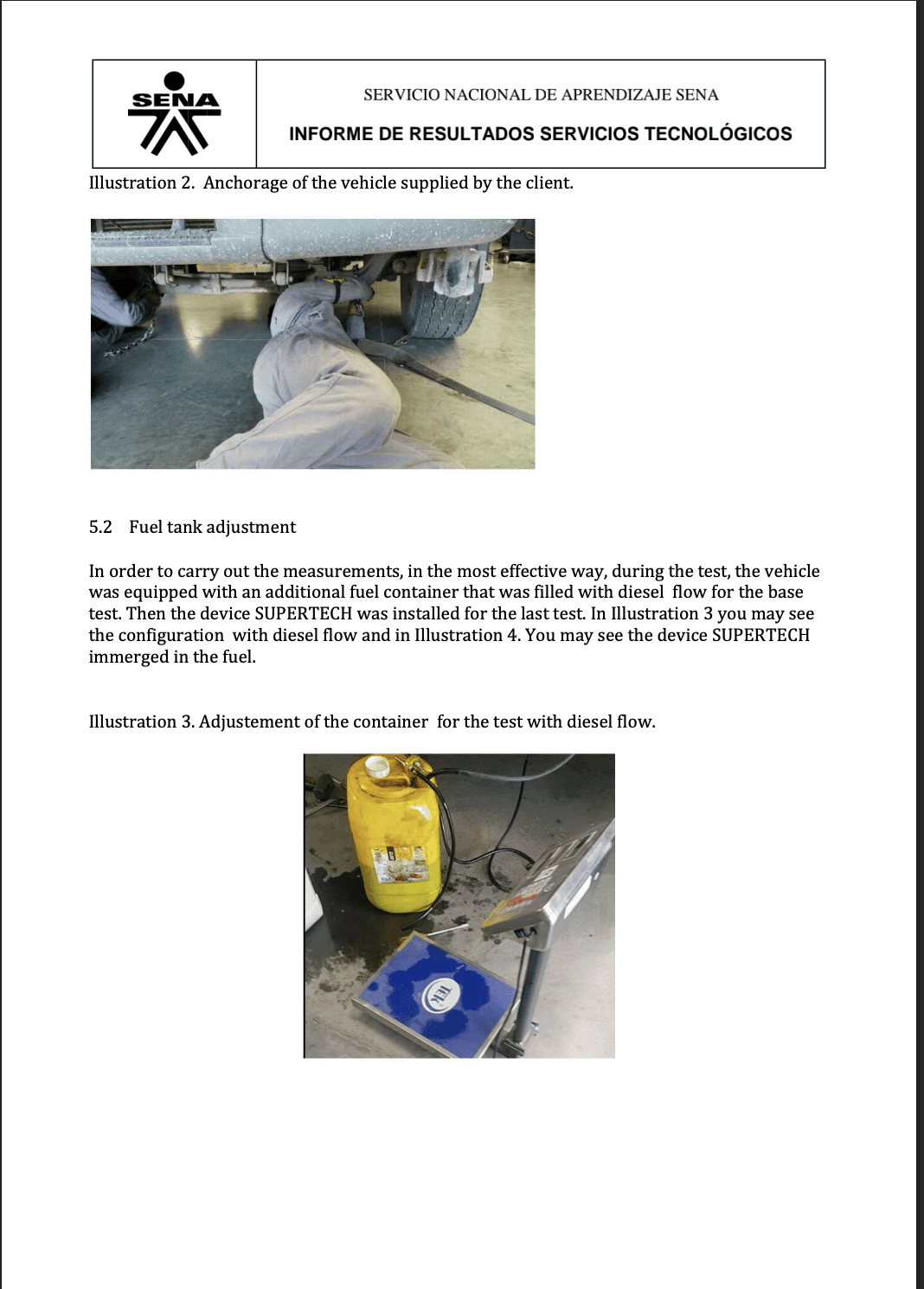
Roller dynamometer (Mustang Dynamometer)
Constant-speed testing at 50 km/h
Test duration: 9 minutes 30 seconds per run
Measurement method:
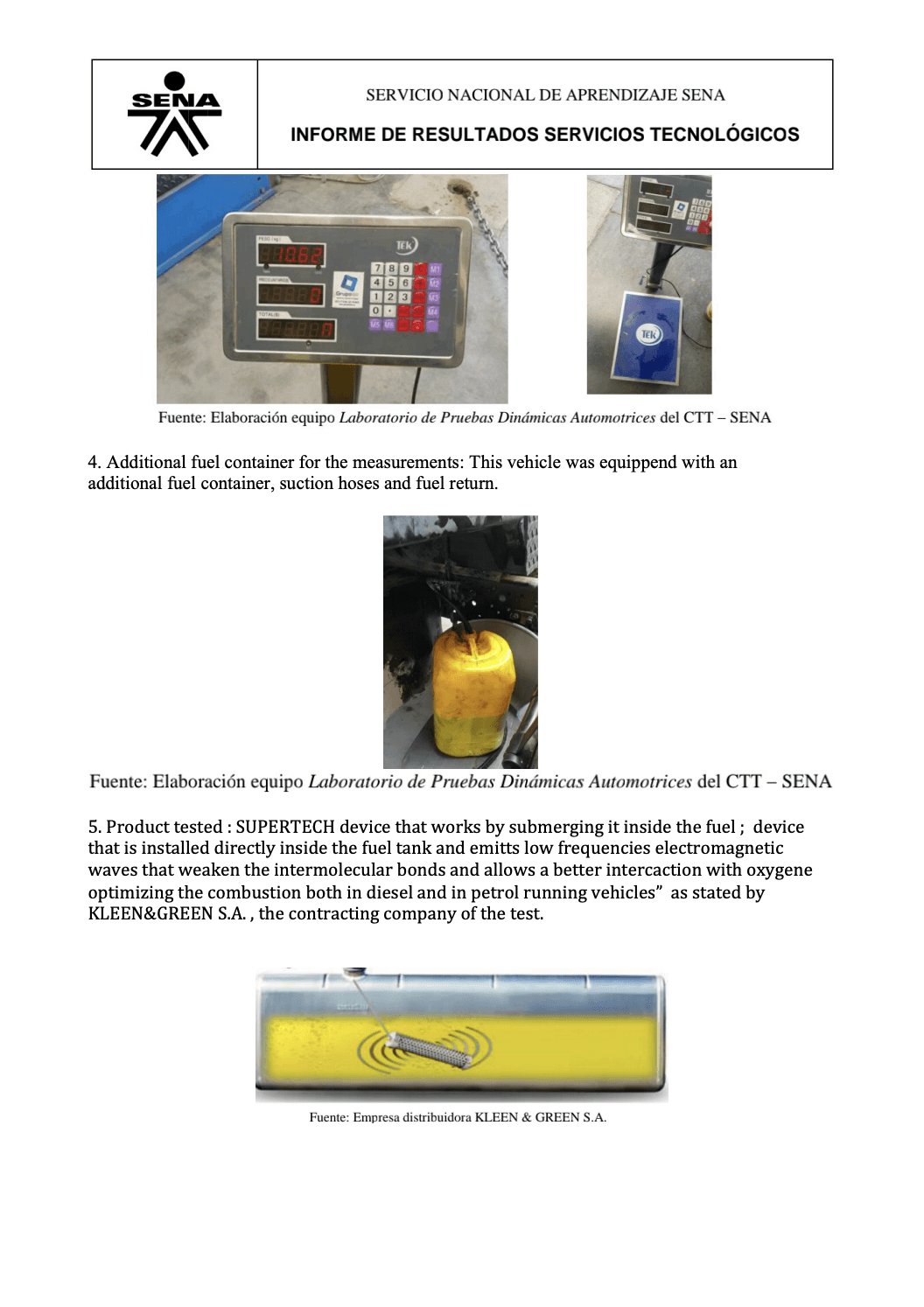
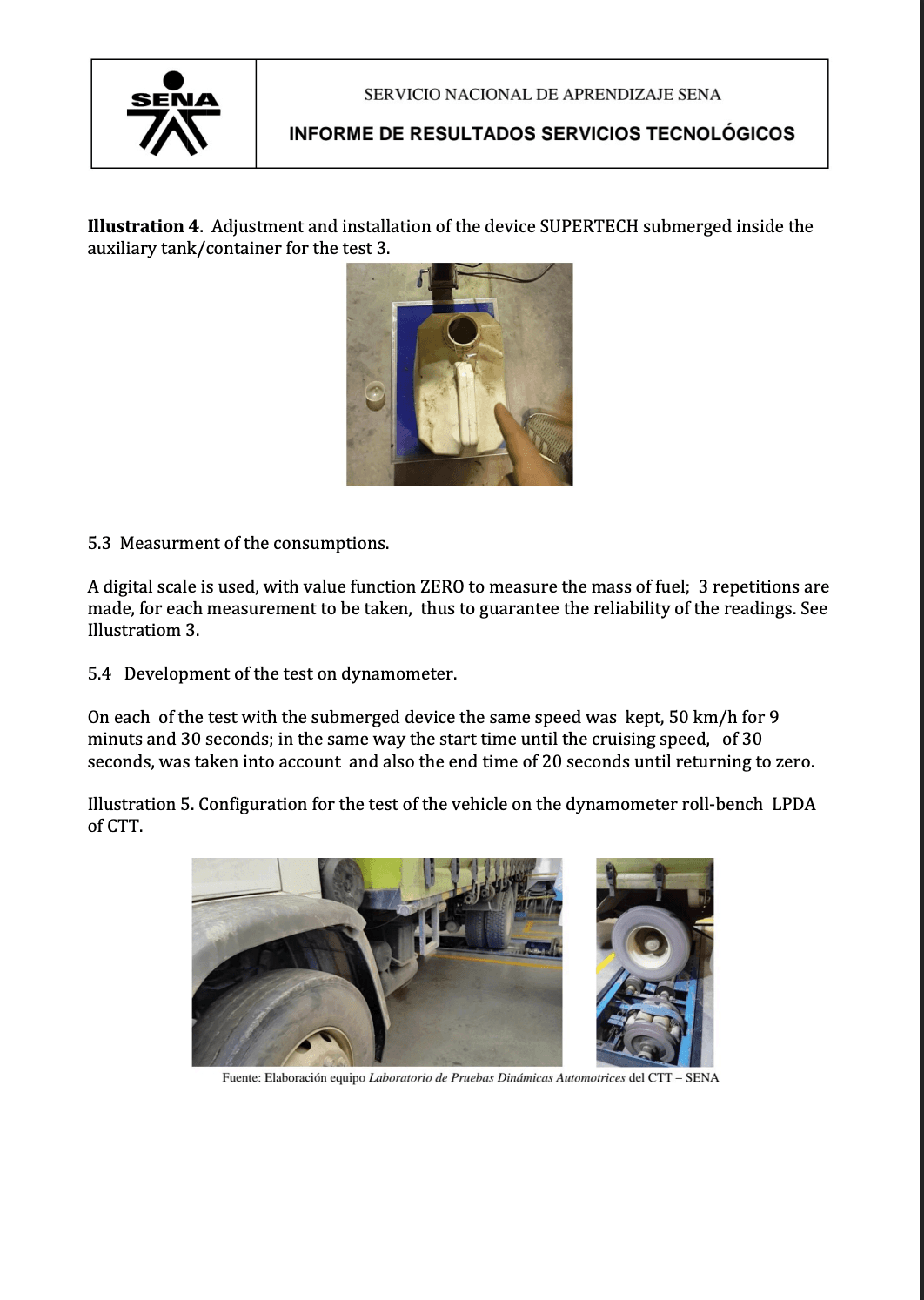
Gravimetric fuel measurement using a calibrated digital scale
Auxiliary fuel container installed for precise mass measurement
Three repeated tests for each configuration to ensure reliability
Comparison:
Baseline testing with diesel fuel only
Follow-up testing with SuperTech® installed inside the fuel container
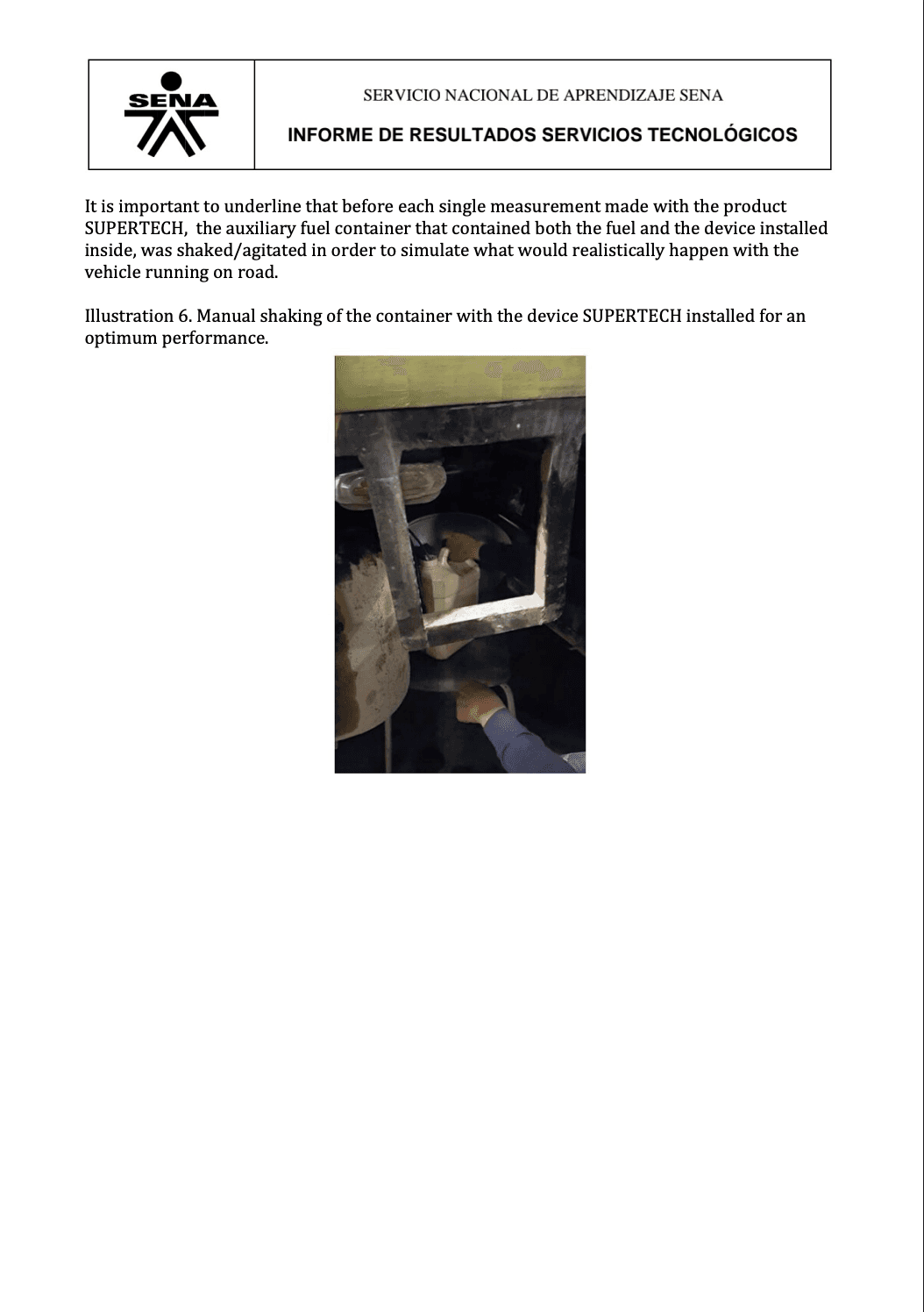
Prior to each test, the fuel container was agitated to simulate real-world fuel movement during vehicle operation
No engine modifications, tuning, additives, or changes to vehicle systems were introduced during testing.
What were the observed results following installation?
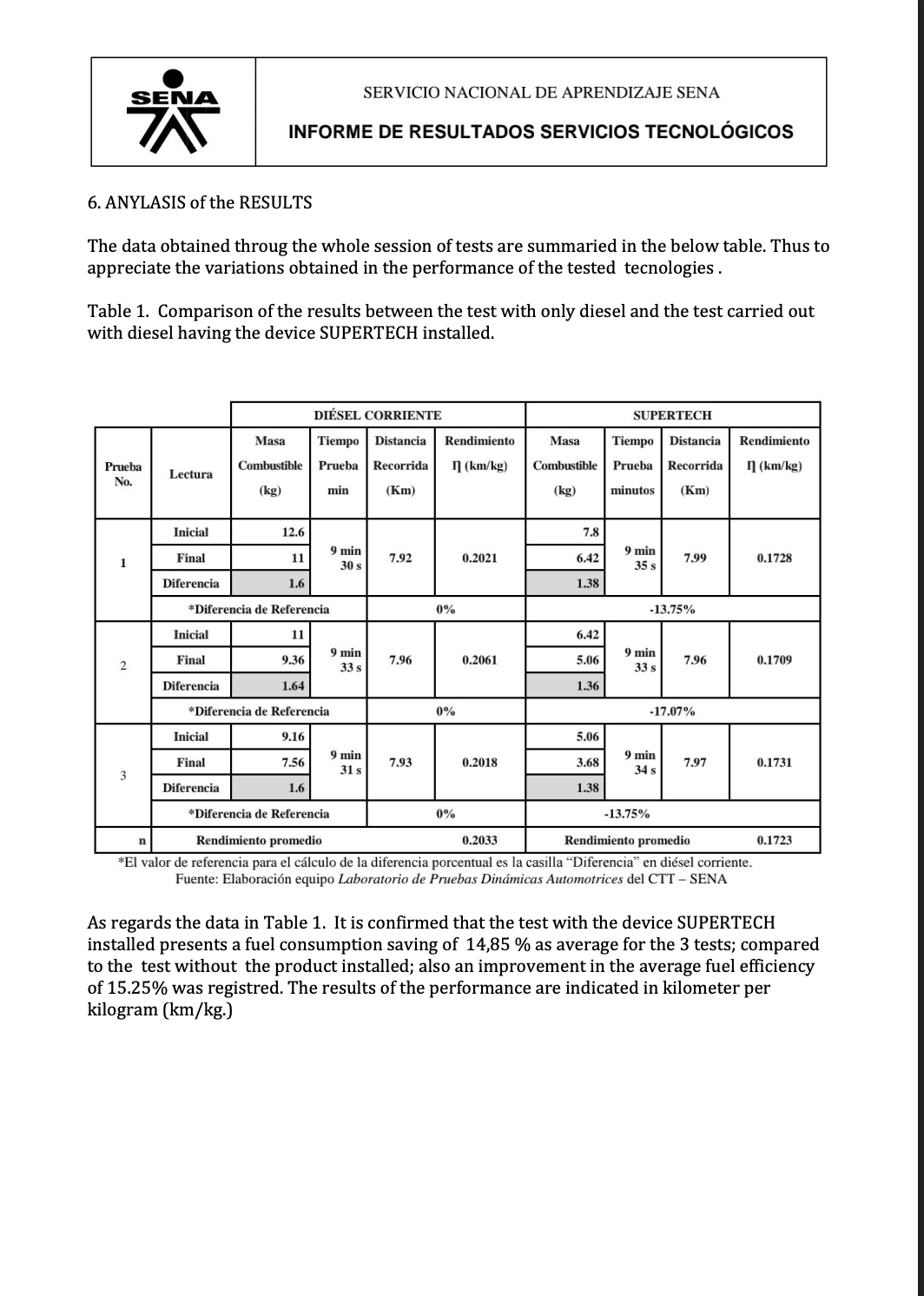
Based on the summarized test data reported by SENA:
Average fuel-consumption reduction: 14.85%
Average fuel-efficiency improvement: 15.25%
Results were consistent across three independent test repetitions
Fuel efficiency was calculated in kilometers per kilogram (km/kg), using mass-based measurement rather than volumetric estimation
The report confirms that the observed fuel-consumption reduction was directly associated with the configuration in which SuperTech® was installed.
What is the key takeaway for engineers and fleet operators?
The SENA evaluation demonstrates that government-operated laboratory testing using gravimetric dynamometer methods can document substantial fuel-consumption reductions associated with upstream, in-tank fuel-conditioning technologies.
This reference documents observed outcomes under controlled laboratory conditions and does not constitute a regulatory certification or guarantee of results. Performance may vary depending on vehicle configuration, operating conditions, fuel quality, and duty cycle.