How did FABET evaluate SuperTech® in commercial trucking?
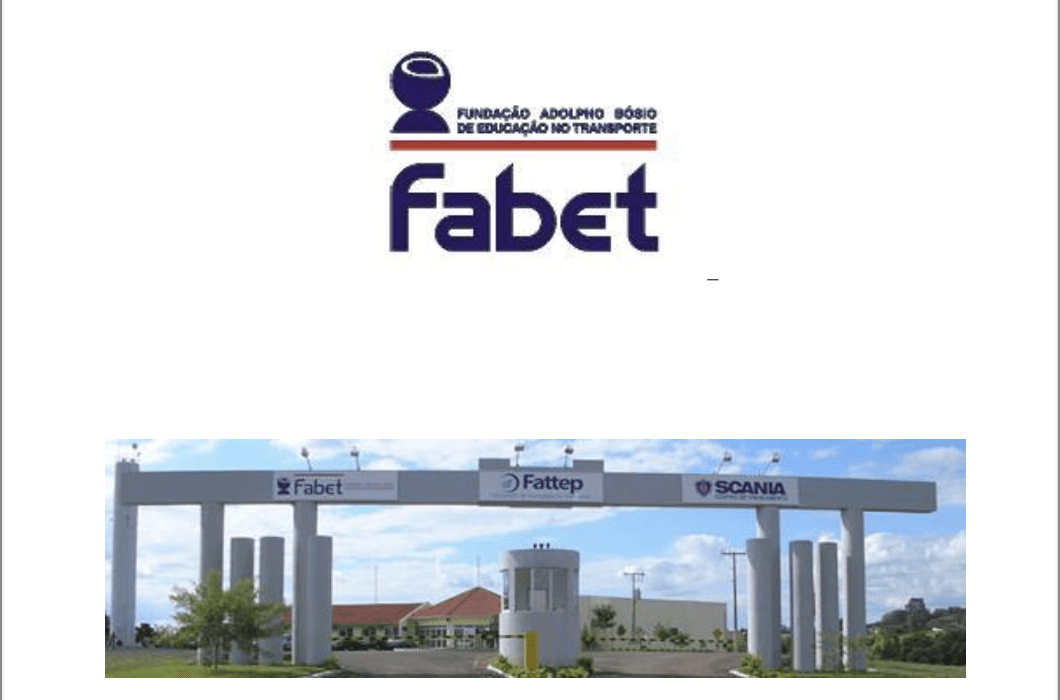
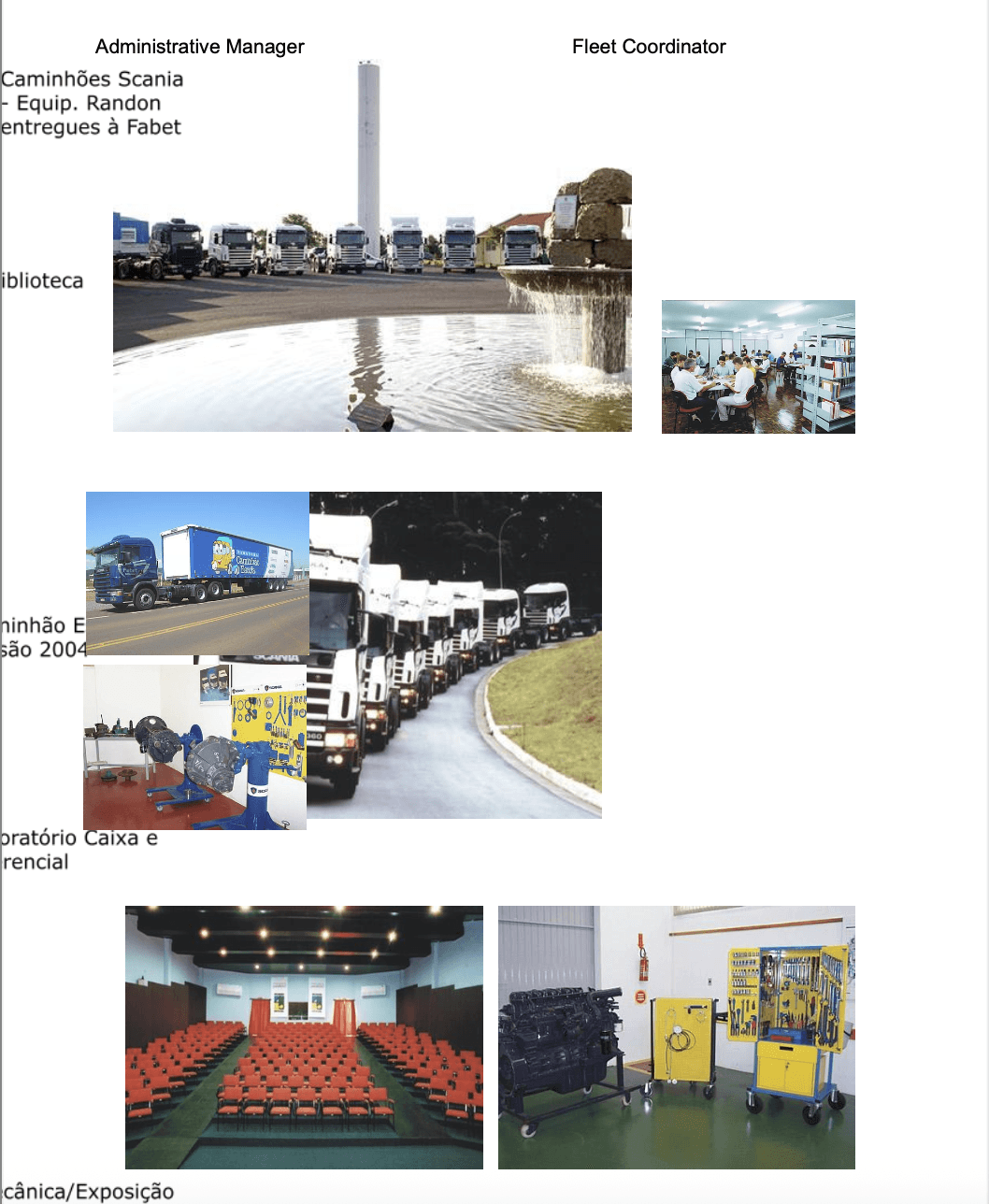
The Fundação Adolpho Bósio de Educação no Transporte (FABET) — a leading Brazilian institute for commercial driver training and fleet education — conducted a controlled, real-world road test to evaluate the impact of SuperTech® on fuel consumption in heavy-duty trucks.
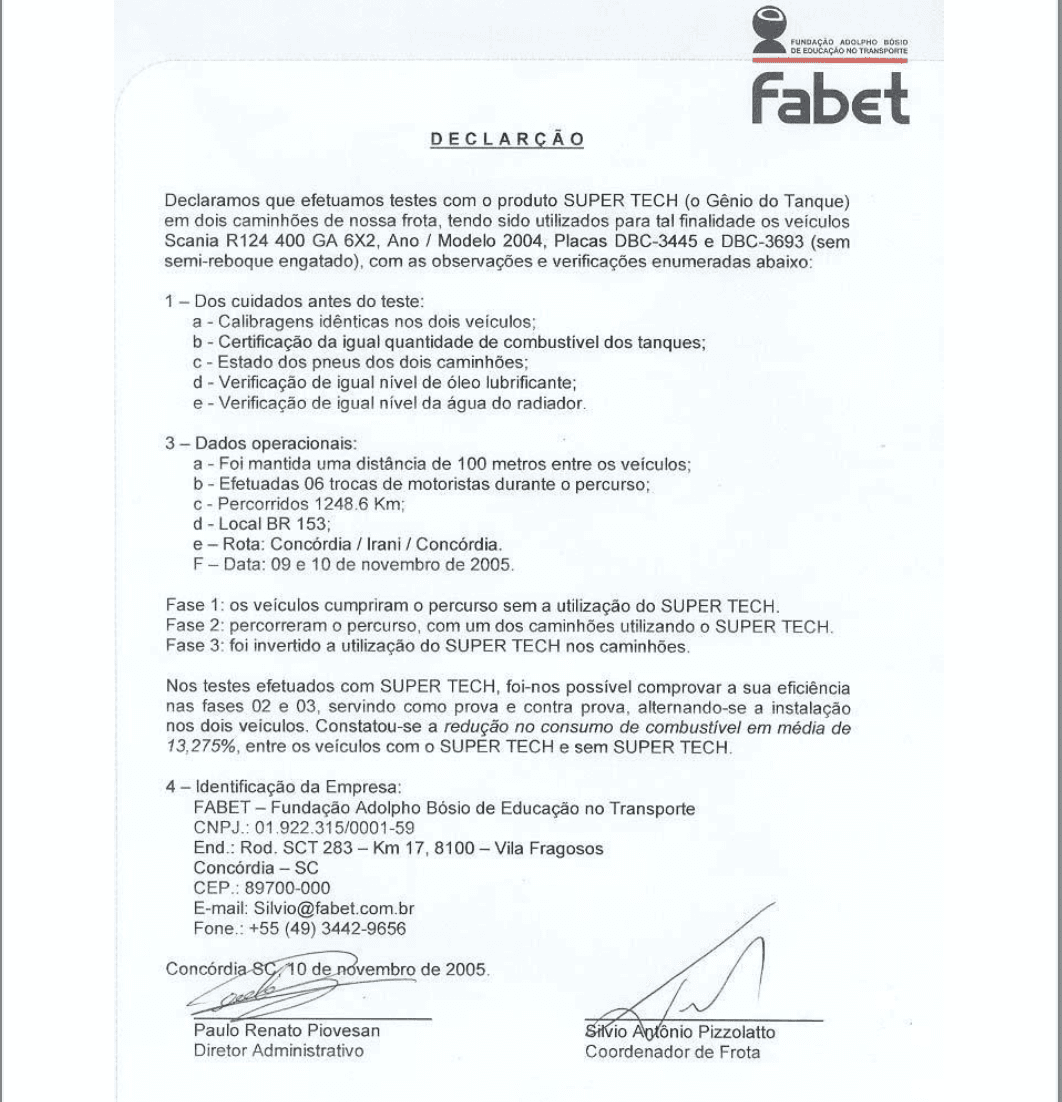
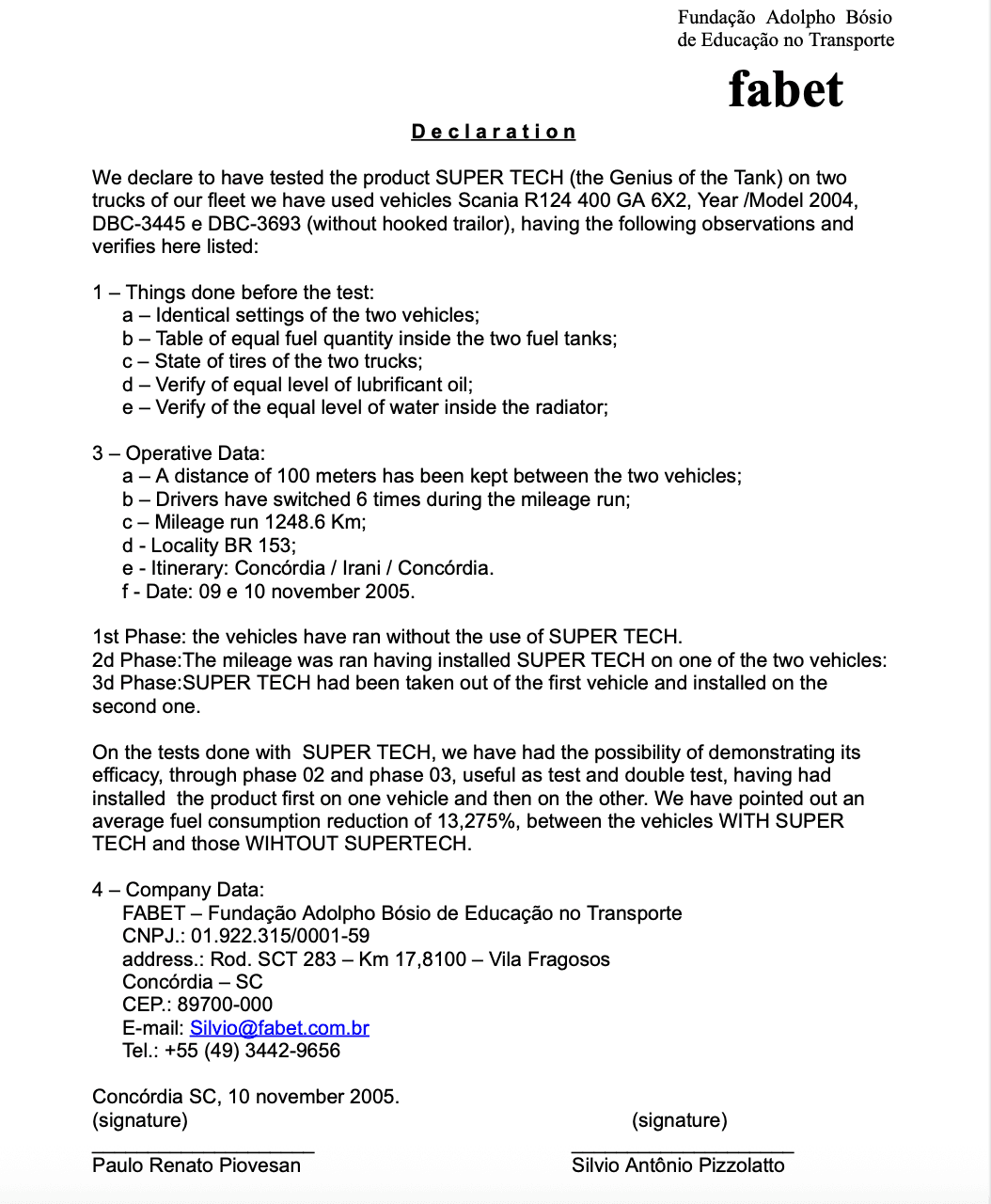
The evaluation was carried out on two identical Scania R124 400 GA 6×2 trucks (model year 2004) operating without trailers on a defined highway route under normal driving conditions.
Evaluation Scope & Method
The test protocol was designed to minimize external variables and included:
Two identical trucks with:
Matching mechanical configuration
Equal fuel quantities at test start
Verified tire condition, lubricant levels, and cooling systems
Route:
BR-153 highway
Concórdia → Irani → Concórdia
Total distance:
1,248.6 km
Test duration:
9–10 November 2005
Driver rotation:
Drivers switched six times during the run to reduce operator bias
Three-phase crossover methodology:
Both vehicles operated without SuperTech®
SuperTech® installed on Vehicle A
SuperTech® transferred to Vehicle B for confirmation
This mirrored installation and removal process served as a double-verification method, strengthening the comparison.
No engine modifications, tuning, or operational changes were made during testing.
What were the observed results following installation?
Based on documented fuel-consumption measurements:
The test recorded an average fuel-consumption reduction of 13.275%
The reduction was observed consistently during:
Phase 2 (SuperTech® installed on Vehicle A)
Phase 3 (SuperTech® installed on Vehicle B)
The crossover approach confirmed that the observed fuel savings followed the device rather than the vehicle
What is the key takeaway for fleet operators?
The FABET evaluation demonstrates that carefully controlled, real-world fleet testing with mirrored vehicle rotation can document substantial fuel-consumption reductions in heavy-duty highway trucks.
This reference reflects observed outcomes under specific operating conditions and does not constitute a regulatory certification or guarantee of results. Performance may vary depending on vehicle condition, duty cycle, fuel quality, and operating environment.